Categories
University News

BYU Engineers Collaborate with Toyota on Advanced Welding Technique

Advertisements

By Mike Romero

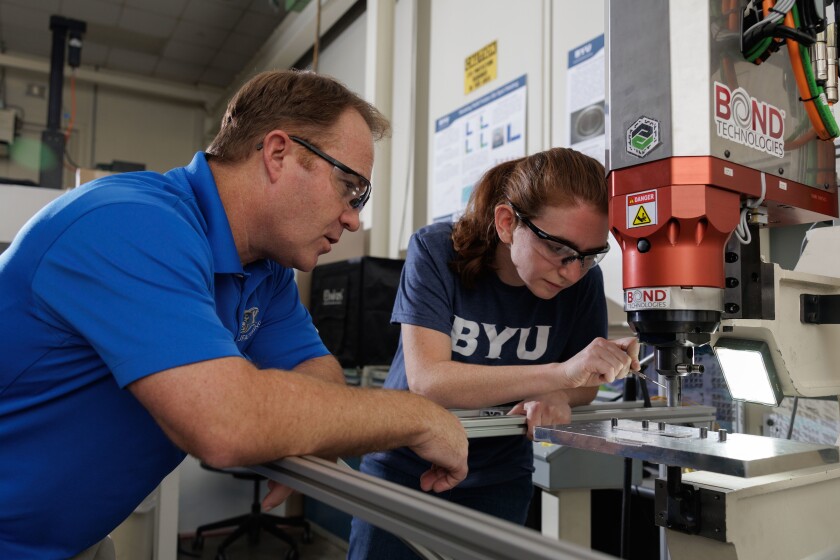
Brigham Young University engineers have partnered with Toyota to develop a new welding method aimed at improving automotive manufacturing. The technique, called refill friction stir spot welding, uses 40 times less energy, reduces emissions, and creates welds 10 times stronger than traditional methods.

Designed for aluminum body panels, the process helps address challenges in joining lightweight materials like those used in Toyota’s popular Sienna minivan. Unlike conventional welding, which melts metal, the new method joins aluminum without melting, resulting in stronger, more efficient bonds. The innovation also reduces the need for filler material, making the process more sustainable.

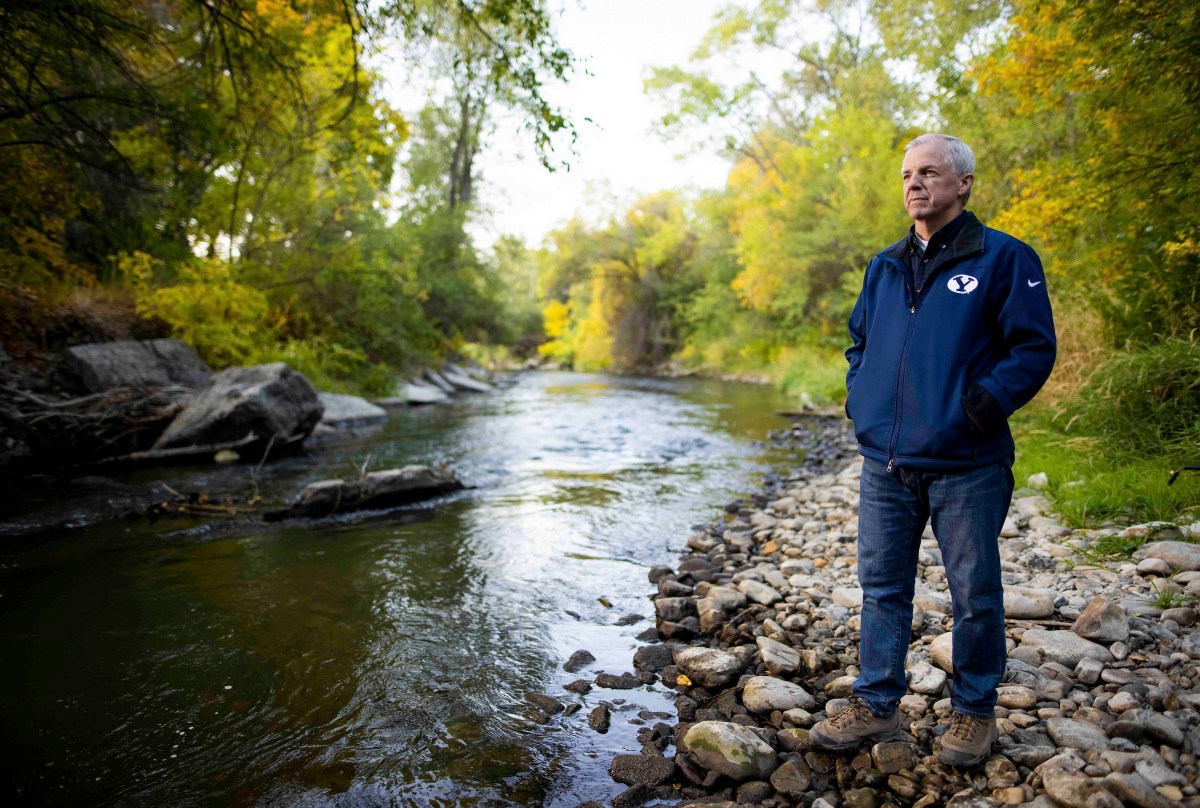
“Ultimately, we’re focused on doing things more efficiently, greener, and cleaner,” said BYU professor Yuri Hovanski, who led the project.

The collaboration began after Toyota saw a demonstration of the technology at a conference. BYU researchers and Toyota engineers tested the new process at Toyota’s Indiana plant, finding that the method could enhance the production of aluminum sliding doors, used in the Sienna and other vehicles.

BYU graduate student Damon Gale, who contributed to the research, said the method could become the new standard for joining aluminum body panels in the automotive industry.

The project aligns with Toyota’s commitment to clean technologies, Hovanski said, adding that the partnership reflects BYU’s mission to foster environmentally conscious engineering.

Learn more at engineering.byu.edu.

Refill friction stir spot welding joins the metal without ever melting it.
Advertisements
Categories
University News

UVU Dance Teams Place In The Top 3 at National UDA Competition

Advertisements

By McKinsleigh Smith

The Utah Valley University Spirit Squad performed at the Universal Dance Association’s 2024 College Cheerleading and Dance Team National Championship January 12-14. Held at the ESPN Wide World of Sports Complex at Disney World, their hip-hop team and jazz team placed in the top 3 of their respective categories. UVU was the only school to place in the top 3 in both categories.

Advertisements

The UVU hip-hop finished less than a point behind the University of Delaware, winning second place in Division I hip-hop. The UVU jazz team placed third.

“Our UVU Spirit Squad represented our university with incredible talent, inspiring routines, and tremendous class,” said Kati Marsing, UVU Spirit Squad assistant director in a press release. “Our teams have been working incredibly hard over the past six months to prepare for this level of competition. Their hard work paid off in big ways.”

You can watch the Utah Valley University Jazz performance from the competition below. Video courtesy of Universal Dance Association.

Advertisements
Categories
University News

UVU’s CARE Hub Food Access Program Receives Award

Advertisements

By Mike Romero

In another win for Utah Valley University, the Orem-based school has received the 2023 NASPA Region V Innovative Program Award, which is “given to a college or university that has developed an outstanding program that has benefited students and enhanced campus life.”

Local news is brought to you in part by Spengler Industries.

NASPA is an association of student affairs administrators in higher education. Region V consists of seven states: Alaska, Idaho, Montana, Nevada, Oregon, Utah, and Washington. The Canadian provinces of Alberta and British Columbia are also included.

The name of the UVU program that won the award? The Utah Valley University CARE Hub’s student food access program.

The CARE Hub helps students who are struggling with mental health, safety, housing problems, and food insecurity. The CARE Hub pantry served more than 1,000 students and over 25,000 pounds of food in 2022. By focusing on students’ basic needs first, UVU helps students stay in school, complete their education, and graduate.

It’s located in UVU’s Student Life & Wellness Center on the Orem Campus. Food is distributed from both the office and from a mobile pantry vehicle that drops food off to UVU’s other satellite campuses. Students can receive fresh, packaged, and canned foods, as well as food vouchers for a hot meal at a campus restaurant.

Students can also order food online and have it delivered free of charge due to a partnership between UVU and DoorDash. This is one of many partnerships that make the CARE Hub work. Partnerships with the Community Action Services & Food Bank, the school’s GRIT Garden on the Orem Campus (run by UVU volunteers), and a fruit tree gleaning program (also run by UVU volunteers) keep the pantry stocked for those in need.

You can learn more about this sustainable ecosystem below.

Advertisements
Categories
University News

New President of BYU Inaugurated

Advertisement for Provo’s Halloween Music Festival.

By Charlie G. Patreus

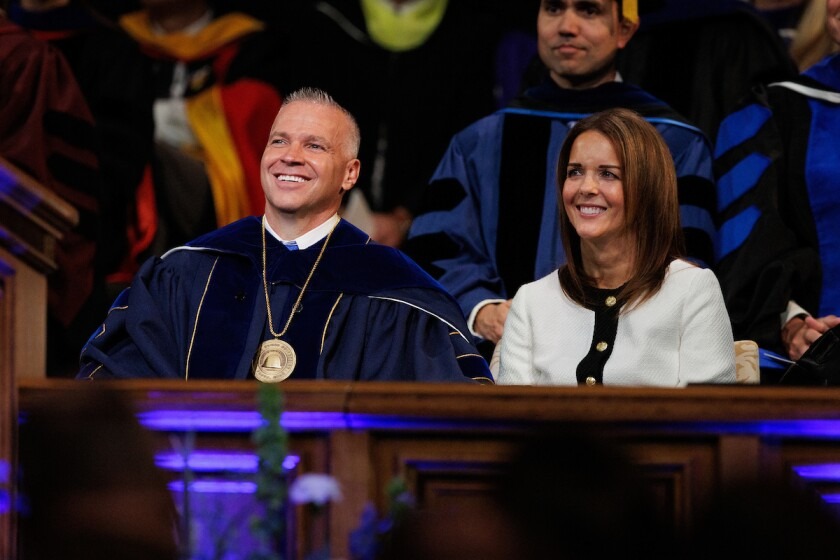
On September 19, 2023, C. Shane Reese officially became the 14th president of Brigham Young University (BYU). This occasion not only marked his formal inauguration but also unveiled his unwavering commitment to help BYU realize its full potential, which Latter-day Saints believe is divine.

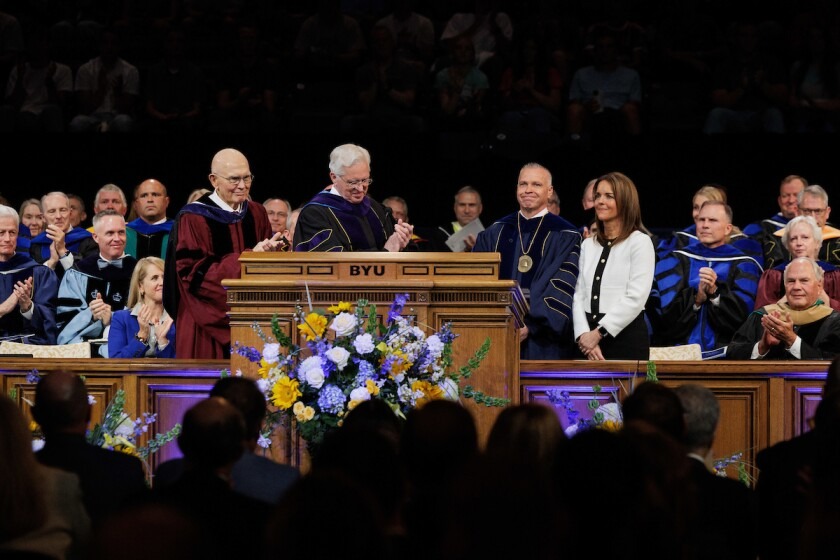
Elder D. Todd Christofferson, a member of the Quorum of the Twelve Apostles of The Church of Jesus Christ of Latter-day Saints and chairman of the Executive Committee of the Board of Trustees, along with President Dallin H. Oaks, first counselor in the First Presidency of The Church of Jesus Christ of Latter-day Saints and first vice chairman of the Board of Trustees, presided over President Reese’s installation.

After taking office, President Reese gave a speech that emphasized his dedication to the university and the crucial role that faculty and students play in fulfilling BYU’s “spiritual mission.” He reiterated the visions of previous leaders (regarded as prophets in the faith) regarding BYU’s future.

Photo by Jaren Wilkey/BYU.

BYU is unique from other educational institutions because it was founded by The Church of Jesus Christ of Latter-day Saints and is still overseen by the government and leadership of the faith. President Reese explained that this unique connection allows the university to benefit from the guidance of the faith’s prophets, including the vision of President Spencer W. Kimball, who articulated a compelling roadmap for BYU’s future.

Advertisements

“Our task is to become the university that prophets foretold — to become the world’s ‘greatest institution of learning,’ ‘the fully anointed university of the Lord about which so much has been spoken in the past,’ to become the BYU of prophecy and promise,” Reese said. “This, then, is the challenge of our generation and the burden of my administration: becoming BYU.”

President Reese stressed that achieving this vision requires enhancing the student experience and reinforcing the student-centric approach. Each student’s “eternal progression” remains BYU’s top priority. He also emphasized the Latter-day Saint belief that each person is a child of God who can be connected to Jesus Christ, and the importance of inclusion and kindness.

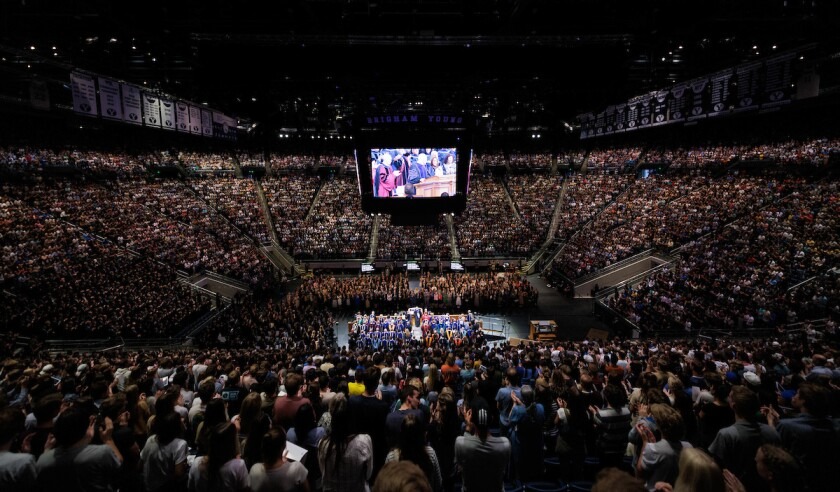
Those in attendance in the BYU Marriott Center for the inauguration of C. Shane Reese. Photo by Brooklynn Jarvis Kelson/BYU.

According to Reese’s philosophy, “Becoming BYU” will also demand maintaining a strong religious identity, even when it means standing alone. That means supporting research aligned with the Church’s mission. It will be interesting to watch BYU pioneer discovery and innovation while balancing tradition, transparency, and intellectual honesty.

Advertisements

Expressing his love and dedication to the BYU community, President Reese committed to making Provo’s university a unique learning environment, fostering peacemakers in an increasingly divided society.

Following President Reese’s remarks, Elder Christofferson and Elder Ronald A. Rasband recognized BYU’s special connection with The Church of Jesus Christ of Latter-day Saints and expressed confidence in President Reese’s leadership.

C. Shane Reese took the place of Kevin J. Worthen, who served from 2014-2023. Watch highlights from the inauguration below.

Advertisements
Categories
University News

BYU Secures Top Spot for Best Library in the US

Advertisement.

By Charlie G. Patreus

The latest edition of The Princeton Review’s renowned “Best Colleges” rankings for 2024 has been unveiled, and Brigham Young University (BYU) has made the list. The annual rankings, now in their 32nd year, are produced by The Princeton Review, a prominent education services company. Unlike traditional rankings that rely solely on academic data and input from college administrators, The Princeton Review’s rankings are exclusively based on surveys completed by college students, providing an authentic reflection of their experiences.

Advertisements

Presented in 50 distinct categories since 1992, the “Best Colleges” lists spotlight 25 outstanding institutions in each category. These lists are accessible on PrincetonReview.com, and they are also published in the latest edition of The Princeton Review’s college guide, titled The Best 389 Colleges, published by Penguin Random House.

Photography by Nate Edwards/BYU © BYU PHOTO 2023

The data operations team at The Princeton Review processed a substantial 165,000 student surveys from The Best 389 Colleges. On average, this translates to approximately 424 surveys per school. The surveys were administered over the academic years 2022-23 and the two preceding years, with students offering insights into their professors, campus amenities, administrative support, financial aid, and various other aspects of their college lives. Detailed information about the survey methodology and ranking criteria is available on PrincetonReview.com.

This year, Brigham Young University was awarded the top spot in the Best Library category, solidifying its reputation as the premier destination for library resources in the nation. BYU also ranked #1 in another (less surprising) category: Most Religious Students.


Advertisement.
Categories
University News

UVU Professor Helps Find CO2 on Distant Exoplanet

Advertisements

By Mike Romero

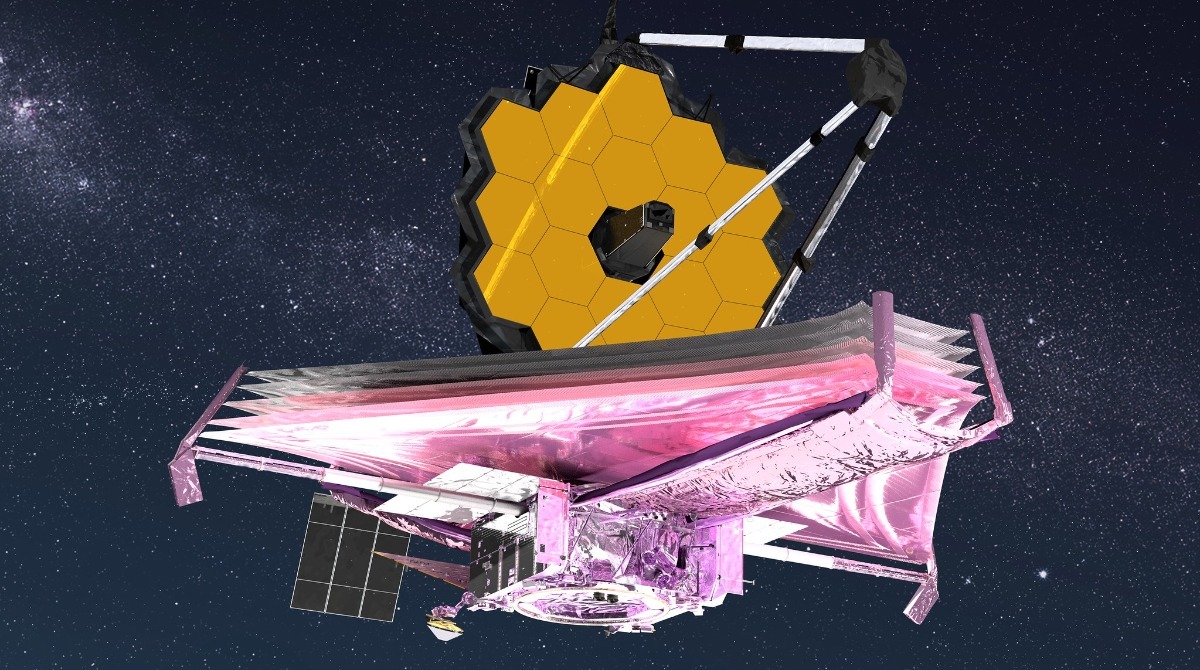
In a remarkable achievement, Utah Valley University science professor Joshua Lothringer helped an international team of planetary researchers discover carbon dioxide (CO2) on an exoplanet. It’s located an astonishing 700 light-years away from Earth. Employing NASA’s state-of-the-art James Webb Space Telescope (JWST), this revelation has potential compelling ramifications for our understanding of distant planetary systems.

Advertisement.

How did they pull this off? Through meticulous observation orchestrated by Lothringer and his fellow scientists. By intently focusing the JWST on a remote star and closely tracking its luminosity over time, a dimming pattern emerged. This phenomenon was the telltale sign of an exoplanet, known as Hot Jupiter WASP-39b, casting a shadow as it passed between the star and the telescope.

The light emitted by stars near the exoplanets that orbit them presents a formidable challenge to direct observation. But infrared cameras, similar to the tech behind night vision technology, track variations in the infrared spectrum emanating from these faraway worlds.

Lothringer’s job was to determine if carbon dioxide was present on the planet. Gases absorb light in distinct fashions, manifesting in discernable color combinations. Carbon dioxide, in particular, absorbs a specific wavelength of red infrared light, a phenomenon that escapes the naked eye. Infrared cameras decode this crucial information.

Joshua Lothringer of UVU

Lothringer used sophisticated computer programs and algorithms to document the light spectrum. “It took months to assemble and sort the data,” said Lothringer about finding CO2. “It is a painstaking process because the wavelengths of the light are measured between 3 and 5.5 microns, and the data has to be exact. However, when all was said and done, it was thrilling to know that we have this ability and that we are contributing to a science that will hopefully someday lead us to habitable planets.”

Hot Jupiter WAS-39b lives up to its name. Made up of hot gas, its temperature is approximately 1,600 degrees Fahrenheit or 900 degrees Celsius. Lothringer’s research has already been published on NASA’s Early Release Science program website: “NASA’s Webb Detects Carbon Dioxide in Exoplanet Atmosphere,” and in Nature: “Identification of carbon dioxide in an exoplanet atmosphere,” a weekly international journal that publishes peer-reviewed research in all fields of science and technology.

WAS stands for “Wide Angle Search for Planets.” Scientists use number and letter designations coupled with the WASP descriptions to keep track of the exoplanets.

Lothringer worked with more than 100 other scientists, who, in addition to CO2, found water vapor, sodium, and potassium in the atmosphere. These findings establish a foundation pivotal for the exploration of smaller, potentially habitable planets. This is especially relevant, given recent congressional discussions surrounding the possibilities of extraterrestrial life.

Advertisements
Categories
University News

BYU Engineering Releases Spaceport America Documentary

Advertisements

By Mike Romero

What does it take to compete in the world’s largest intercollegiate rocket engineering competition? A new documentary from the Ira A. Fulton College of Engineering answers that question. Shot by BYU students and filmmakers Sawyer Nunley and Heber Stanton, it tells the story of BYU’s High-Power Rocketry Team as their rocket, Maverick, prepares for launch at the 2022 Spaceport America Cup.

Advertisement.

Maverick was built with an Aerotech M2400 motor and a machine-learning module to prevent water from sloshing within the rocket’s payload. Despite mechanical difficulties ahead of launch, the rocket reached a height of 10,432 feet, earning the BYU team a rank of 11th out of 46 teams in their category at the 2022 Spaceport competition. The team also received 2nd place for the Barrowman Award for Flight Dynamics and 2nd place for the Sportsmanship Award.

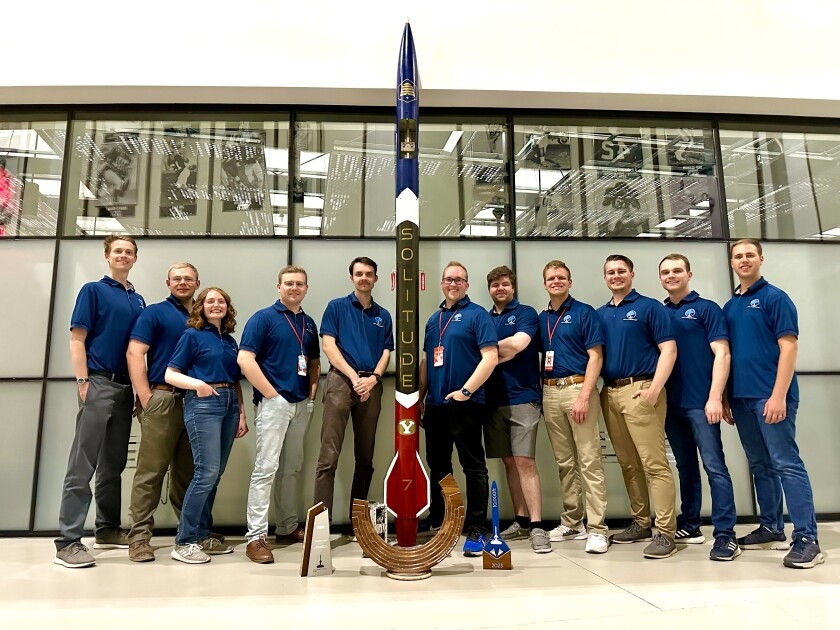
The BYU rocketry team returned to take 1st place in the 2023 Spaceport America Cup with their rocket, Solitude (named for the Utah-based ski resort). They also received 1st place for Modeling and Simulation. BYU beat out 157 other collegiate teams from 24 countries for the title.

Check out the documentary below.

Advertisements
Categories
University News

BYU Is Finally In The Big 12

Advertisements

By Mike Romero

It’s been a long 22 months. After nearly 2 years of waiting, BYU will end its era of independence by uniting with the elite Big 12 for the 2023-2024 season. Celebrations among students, fans, and alumni took place this past weekend.

A massive gathering was held in Provo, Utah. Fans gathered and counted down until midnight, when the BYU Cougars were officially admitted into the conference. BYU even made a massive announcement on a digital display at Times Square in New York City.

Advertisement.

BYU’s sports teams will compete in 20 of the 23 sports sponsored by the Big 12. The school won’t participate in wrestling, rowing, or equestrian. Since the Big 12 doesn’t support men’s volleyball, BYU’s men’s volleyball team will stay in the Mountain Pacific Sports Federation.

In a major win for Latter-day Saints and a gracious move on the part of the Big 12, BYU will not compete in athletic events on Sundays – a holy day for members of The Church of Jesus Christ of Latter-day Saints.

BYU football begins their 2023 season with three non-conference home games. Then they’ll hit the road to take on Kansas on September 23. Home games this year include Cincinnati on September 29, Texas Tech on October 21, Iowa State on November 11, and Oklahoma on November 18.

Advertisements
Categories
University News

BYU Students Construct Solar-Powered Concrete House on Campus

Advertisements

By Zach Collier

In a groundbreaking achievement, students from Brigham Young University (BYU) have designed, engineered, and built a sustainable, zero-energy dwelling directly on campus. Tucked away behind BYU’s Snell Building, this two-bedroom, two-bathroom residence has received hundreds of visitors this month.

Advertisements

Affectionately known as the “Triple Dome Home,” this architectural marvel comprises three interconnected monolithic concrete domes. A featured dwelling in the Utah Valley Parade of Homes, this zero-energy domicile spans a modest 850 square feet and stands as a testament to the prowess of student builders. This transportable house can be relocated wherever a crane can be stationed. In fact, this particular dwelling will soon be uprooted and transported to California for sale later in the fall.

Built as part of the U.S. Department of Energy’s Solar Decathlon, it’s meticulously designed. The house aims to minimize its carbon footprint, curtail water consumption, and effortlessly maintain a consistent temperature throughout both frigid winters and scorching summers.

The interior of the BYU Triple Dome Home by BYU Photo.

The Triple Dome Home boasts several remarkable engineering features, including the utilization of fiberglass in lieu of rebar as the primary material for reinforcing the concrete structure. Additionally, a PVC membrane envelops the entirety of the exterior walls, providing insulation and imperviousness to water. Portions of the exterior walls are concealed beneath soil, rocks, and plants, creating an innovative berming technique.

Advertisements

The residence harnesses the power of 34 double-sided solar panels seamlessly integrated into a carport and an adjacent pergola. Thanks to its concrete dome construction, the house boasts windproof and fireproof properties while remaining resilient to extreme temperatures. Enhanced energy efficiency is achieved through the inclusion of triple-paned windows.

This undertaking has stretched the physical and intellectual capabilities of over 20 students involved in the design, engineering, and construction processes.

BYU represents one of the 15 universities hailing from the United States, Canada, and India that took part in the esteemed Solar Decathlon Build Challenge. Later this year, the BYU team and their Triple Dome Home will also compete in the Orange County Sustainability Decathlon.

There are only two days left to tour the home before it moves to California. The Utah Valley Parade of Homes is happening now, and concludes on June 24.

Advertisements
Categories
University News

UVU Hosts First Silicon Slopes Artificial Intelligence Summit

Advertisements

By Charlie G. Patreus

Artificial intelligence (AI) has the power to bring about both positive advancements and potential chaos and devastation. This was the key message conveyed at the inaugural Silicon Slopes Artificial Intelligence (AI) Summit hosted by Utah Valley University.

Tyler Folkman is the chief technology officer and AI officer for Benlabs, an organization dedicated to exploring the applications of machine learning in transforming creator entertainment. Folkman was among the esteemed AI experts who shared their insights at the conference.

Advertisements

He explained that we are yet to comprehend the full potential of AI. He said there is a belief that it can achieve remarkable feats, but there is also a lot of fear associated with it. As we continue to enhance its capabilities, AI holds boundless possibilities to assist us. While it could potentially cause harm, he believes we now have the ability to control and mitigate those risks.

Utah Attorney General Sean Reyes emphasized the need for the tech industry’s involvement in shaping policies and laws surrounding AI. Reyes urged experts and AI consumers to ensure that the regulations implemented protect humanity without impeding the positive applications of AI.

Reyes also pointed out the existence of current tools and ongoing efforts in this regard. He highlighted proposals such as digital watermarks or inherent ID markers that can help distinguish between authentic and fake content, benefiting consumers, businesses, and legal proceedings.

Rachel Bi, an associate professor in UVU’s Personal Financial Planning Program and head of the Finance and Economics Department at the Woodbury School of Business, has been actively researching business applications of AI, machine learning, blockchain, and cloud computing for several years.

UVU aims to be at the forefront of technological adoption.
Advertisements

Bi explained the distinction between two types of AI. Narrow AI, or weak AI, is designed to tackle specific tasks or solve particular problems. On the other hand, general AI, or strong AI, aims to replicate the broad cognitive abilities of human intelligence, enabling it to comprehend, learn, and perform any intellectual task humans can.

“The majority of the AI that we engage with on a daily basis are narrow AI, including the famous ChatGPT,” Bi said. “It is worth mentioning that developing a general AI could be very challenging and is not yet realized, although people are working on it. But the attainment of self-awareness of general AI will raise profound philosophical, ethical, and technical questions that are hotly debated.”

Bi further highlighted AI’s impact on the financial sector, citing the use of robo-advisors to manage stock portfolios and AI algorithms to determine individual credit scores by analyzing extensive personal data, such as debt, revenue, and spending habits.

Other speakers at the summit included Dave Wright, CEO of e-commerce acceleration platform Pattern, and Christina Baum, vice president of Digital Transformation and chief information officer at UVU.

“I love that UVU is being recognized as leading out,” Baum said. “I love our partnership with Silicon Slopes. I think there is so much that we can leverage artificial intelligence for in the education space, and I think instead of being scared of where that might lead us educationally, we need to embrace that and find ways that we can really catapult our education forward and help remove barriers for students.”

Advertisements

UVU is well-positioned to adapt to AI-powered learning. George Rudolph, chair of UVU’s computer science department, emphasized that hosting the AI Summit conference strengthens UVU’s connection to local industries and reinforces its commitment to cutting-edge workforce development.

The one-day conference also marked the official launch of the Silicon Slopes AI chapter, further fostering collaboration and progress in the field of artificial intelligence.

For another example of how UVU is embracing cutting edge technologies, check out their work with VR and drones below.

Advertisements