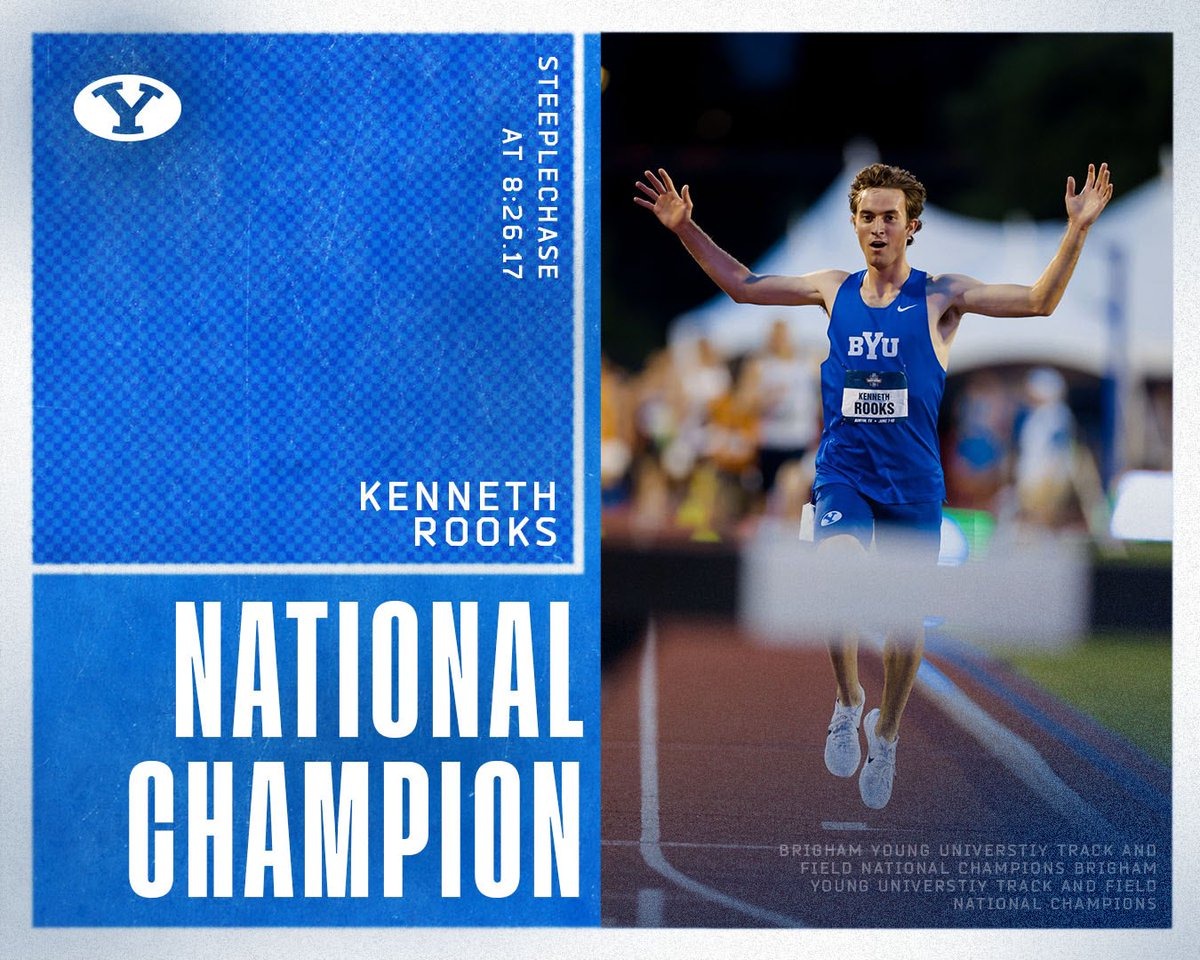
In an impressive display of skill and determination, Kenneth Rooks, a junior at Brigham Young University (BYU), has claimed the coveted national men’s steeplechase title for the second year running. Rooks achieved this feat during the recent NCAA championships held in Austin, Texas, with a remarkable finishing time of 8:26.17. This accomplishment not only solidifies his place among the nation’s elite athletes but also establishes BYU as the first institution in history to produce back-to-back winners in this event.
Advertisements
Rooks asserted his dominance by finishing more than six seconds ahead of the runner-up, Duncan Hamilton. Throughout the race, he reserved energy in the middle of the pack before a final burst during the last 400 meters, which propelled him towards the championship.
With his stellar performance on Friday, Rooks has now earned the title of three-time steeplechase All-American and holds the fastest recorded time in BYU’s program history for this event. He joins an esteemed group of previous BYU champions, including Kyle Perry (2009), Josh McAdams (2006), and Bob Richards (1966), and becomes the first male athlete from BYU to claim an individual steeplechase championship since Clayton Young in 2019.
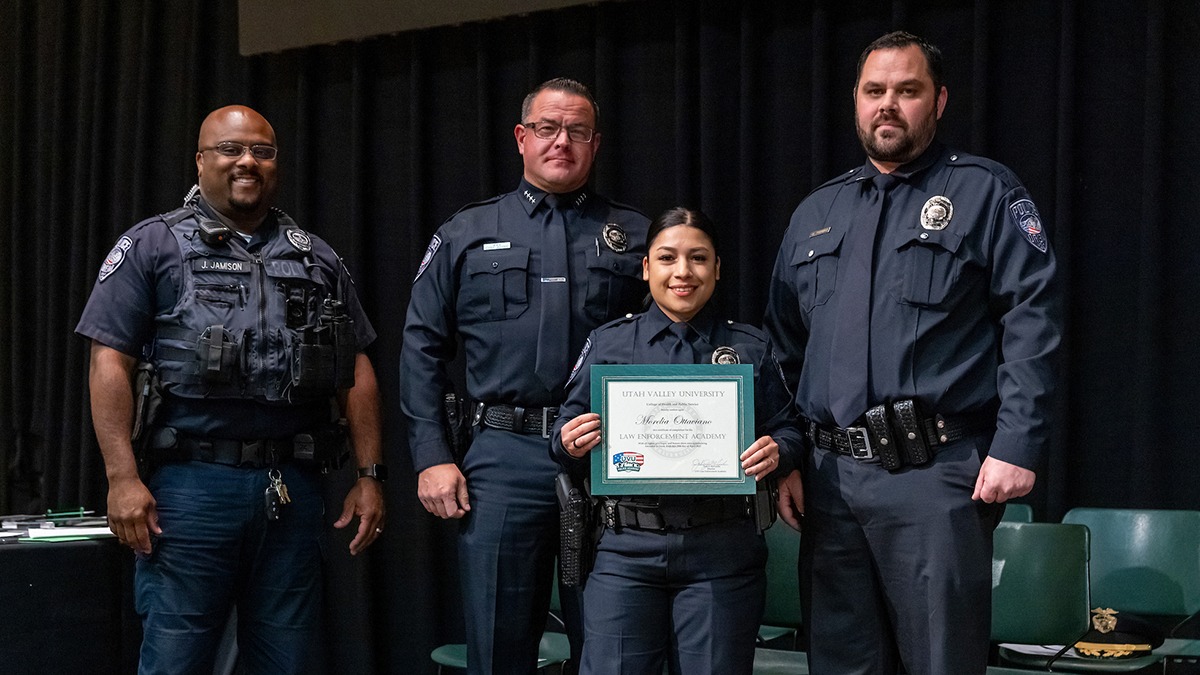
In a significant milestone for gender diversity in law enforcement, the Utah Valley University Police Academy saw a record number of female cadets graduate this year. Out of the total graduating cohort of 28 cadets, six were women, representing 21% of the class. This figure is double the number of female graduates in any previous year since the academy’s establishment in 1996.
Advertisements
The statistics from Utah Valley University (UVU) are particularly noteworthy considering the national average of sworn women police officers stands at 13%, with only a 3% increase since the 1970s. Leaders in law enforcement across the country are increasingly recognizing the advantages of recruiting, training, and promoting more female officers.
John McCombs, director of UVU’s Police Academy, highlights the significant impact female officers can have as communicators, particularly in addressing violence against women and sex crimes. Their empathetic approach and ability to de-escalate intense situations contribute to their effectiveness.
Advertisements
The concept of empathy plays a crucial role in police de-escalation training. McCombs explains that finding a way to relate to individuals and establishing effective communication is the starting point for the entire de-escalation process.
Mellanie Seamons, a UVU Police Academy graduate who now serves as a Provo police officer, echoes this sentiment. She emphasizes that women often possess nurturing qualities and are more inclined to engage in conversations with people.
A 2014 study from the University of Zurich supports the notion that female victims of sexual assault or violence feel more comfortable reporting their experiences to female police officers.
Seamons further elaborates on the significance of female officers in cases involving victims of sexual assault, stating, “A lot of people will get the information they need and pass it on to where it needs to go, but I try to make sure the victims know, ‘you aren’t alone in this, and none of this is your fault, you did not do anything to deserve this.'”
Both McCombs and Seamons note that children also tend to feel more drawn to women in law enforcement. Seamons, who has worked on sex crime investigations in collaboration with the Utah Department of Child and Family Services, explains that 90% of children prefer speaking to either a female social worker or a female police officer.
Advertisements
Research indicates that female officers contribute to better police-community relations, are less likely to use excessive force, face fewer complaints and lawsuits, and are perceived as more honest and compassionate.
The UVU Police Academy, a satellite of the Utah Peace Officer Standards and Training (POST), is committed to providing professional law enforcement training through state-of-the-art learning models, advanced technology, and best practices in public safety. The academy’s experienced staff, including local police officers, attorneys, and specialists, ensure that cadets receive comprehensive training in areas such as criminal law, defensive tactics, firearms, investigation, terrorism, and scenario-based exercises. This rigorous preparation equips graduates to serve as police officers, investigators, or parole/probation officers in any police department in the state of Utah.
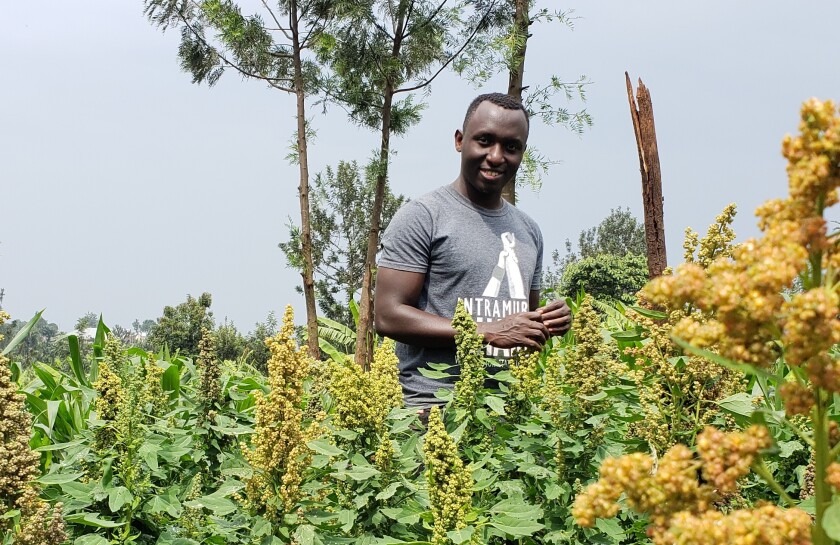
WSU student Cedric Habiyaremye. Photo by Olivier Ndayiramije.
Advertisements
By Mike Romero
Scientists from Brigham Young University (BYU) and Washington State University (WSU) have developed new varieties of quinoa that can thrive in challenging growing conditions, particularly in Rwanda and other African countries.
Advertisements
The recently released varieties, including “Cougar Quinoa” (named after the universities’ mascots), offer tall, colorful plants that yield abundant seeds and edible leaves rich in B vitamins and fiber. Cougar Quinoa stands out with its striking purple and green leaves, while the other two varieties, named Shisha and Gikungu in the Kinyarwanda language, symbolize “flourishing” and “economy,” respectively.
Quinoa is a highly nutritious crop that holds immense potential due to its ability to grow in poor soil conditions. However, to fully realize this potential, it is crucial to develop quinoa varieties suited to different environments, according to BYU professor Jeff Maughan.
A versatile crop that benefits small farmers in Rwanda, quinoa can be consumed alone, mixed with rice, ground into flour for baking, or used in beverages. Quinoa leaves can be harvested and eaten between harvests, the stalks can serve as livestock feed, and the seeds can be stored without the need for chemical treatments.
Cougar Quinoa growing in a field in Rwanda. Photo by Olivier Ndayiramije.
For the past twenty years, Maughan and his colleague Rick Jellen, professors of plant and wildlife sciences at BYU, have been actively researching ways to introduce new plants, including quinoa, into the global food supply. The three newly released quinoa varieties were bred back in 2004 and were among the approximately 1,000 breeding lines provided to WSU by the BYU researchers in 2012.
Advertisements
Kevin Murphy, director of WSU’s Sustainable Seed Systems Lab, expressed gratitude for the collaboration, stating that the BYU researchers’ generosity kickstarted their quinoa breeding program and significantly expanded their selection of quinoa lines. The selected strains were tested for yield, disease resistance, maturation time, and other desirable traits at WSU’s Tukey Organic Farm and later in Rwanda by Cedric Habiyaremye, a WSU graduate and current research associate.
The new quinoa varieties have shown excellent performance in Rwanda’s diverse landscapes and are particularly well-suited for equatorial regions. The release of these varieties for Rwanda marks a significant milestone in the shared goal of improving global food security.
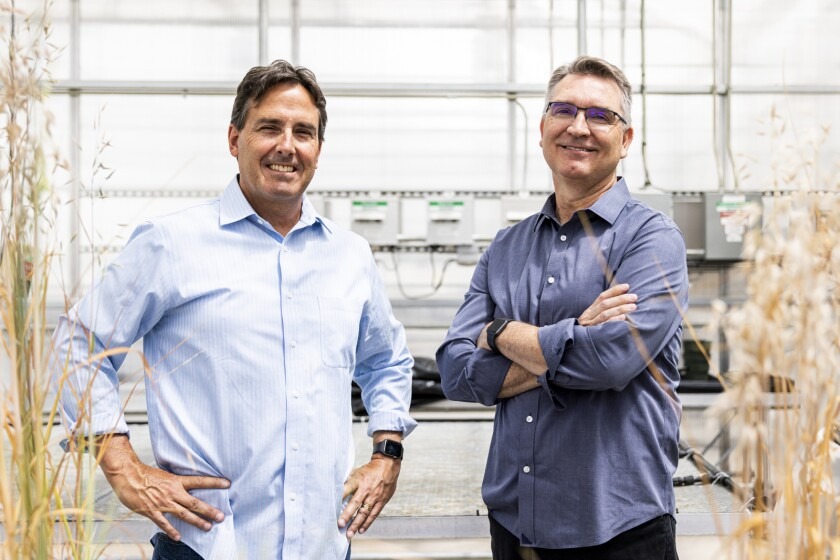
BYU professors Rick Jellen and Jeff Maughan in a greenhouse on BYU campus. Photo by BYU Photo.
Advertisements
Cedric Habiyaremye, who experienced the 1997 famine in Rwanda as a child, has been personally involved in testing and promoting quinoa in the country. Habiyaremye introduced quinoa to Rwanda in 2015 and, with his mother’s help, initiated a micro-extension program that now involves over 700 Rwandan farmers.
Habiyaremye’s vision is to combat hunger and malnutrition by making quinoa accessible to all. He is collaborating with Rwanda’s Ministry of Agriculture and Animal Resources, as well as farmers and research institutions in Kenya, Zimbabwe, Gambia, Malawi, Lesotho, and South Africa to expand quinoa’s acceptance and impact.
BYU researchers, including Maughan, Jellen, and David Jarvis, continue to collaborate with quinoa breeders across Sub-Saharan and northern Africa, Latin America, and Asia. Their ongoing efforts align with the universities’ mission to address real-world problems such as food insecurity in developing nations, providing hope for a brighter future through improved nutrition and agricultural practices.
Learn more about how BYU is feeding the world in the documentary below.
Utah Valley University’s (UVU) School of Aviation Sciences is set to become the first collegiate flight training program in the country to transition its entire training fleet to fully unleaded aviation fuel (UL94).
Advertisements
Operating since 1988, UVU’s School of Aviation Sciences has trained and educated numerous FAA certified pilots and aviation industry professionals, boasting a graduate job placement rate exceeding 92%.
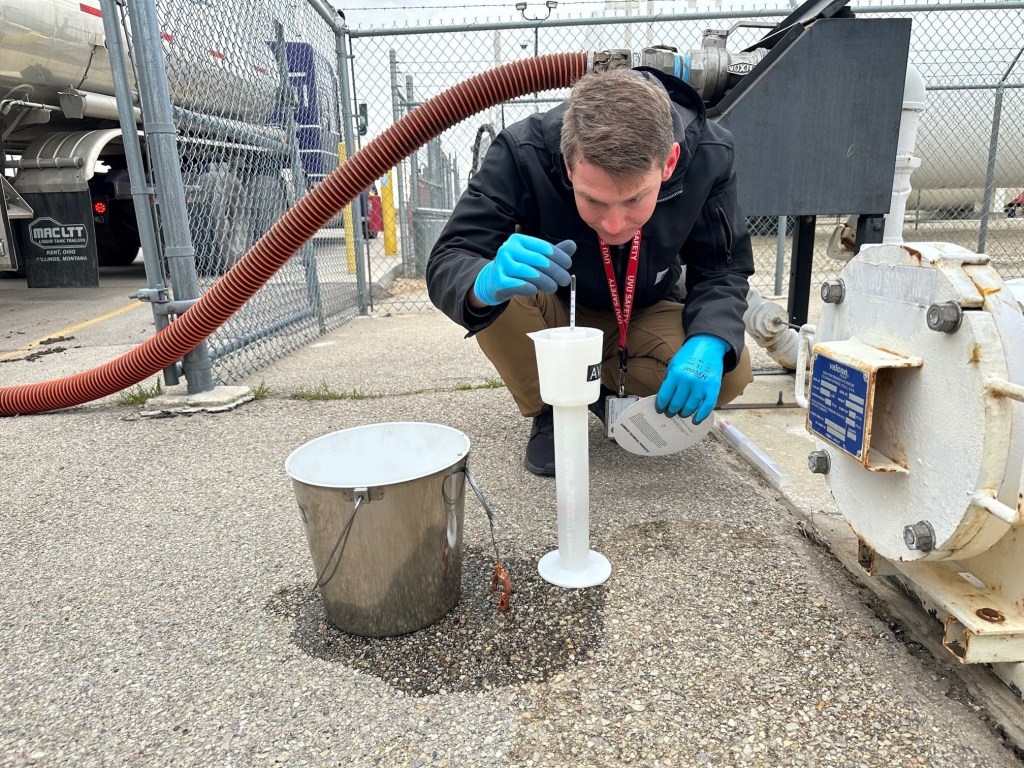
In collaboration with Swift Fuels, a fuel research and development company based in Indiana, UVU recently received its initial shipment of UL94, marking a significant milestone in the adoption of unleaded fuel for piston-engine aircraft. While leaded fuel has traditionally been used in these aircraft due to the need for higher-octane fuel, Swift Fuels’ UL94 is a lead-free alternative that has gained approval for use in approximately 70% of existing piston aircraft. Although still in the early stages of adoption, UVU’s fleet of 25 aircraft, comprised of Diamond DA40s and Piper Seminoles, is fully compatible with this new fuel and ready to reap its benefits.
Nick Marsh, supervisor of aviation operations at UVU.
Advertisements
The switch to UL94 brings several advantages to the aviation program. Engines running on this fuel will experience smoother operations and fewer mechanical issues, such as fouled spark plugs. Moreover, mandatory aircraft inspections will require less time and manpower, leading to reduced maintenance costs for UVU. John James, the director of aviation maintenance at UVU, highlighted how the cleaner-burning nature of UL94 benefits engine components, ultimately resulting in enhanced efficiency and cost-effectiveness in student training.
Beyond the cost advantages, UL94 serves as a more environmentally friendly alternative. It significantly reduces lead exhaust emissions, aligning with UVU’s commitment to sustainability. Nick Marsh, the supervisor of aviation operations at UVU, expressed his enthusiasm for the transition, emphasizing how the use of unleaded fuel would create safer working conditions for fuel-handling employees by eliminating their exposure to leaded fuel.
Curt Castagna, President and CEO of the National Air Transportation Association (NATA), commended UVU’s decision to adopt UL94 and recognized the university’s leadership in promoting community partnership and environmental progress. As an academic institution and early adopter of UL94, UVU has the opportunity to educate the industry on the use of environmentally friendly aviation fuels while training future pilots.
Advertisements
NATA, the leading national trade association representing general aviation service companies, is part of the industry’s Eliminate Aviation Gasoline Lead Emissions (EAGLE) initiative, which aims to transition piston-engine aircraft to lead-free aviation fuels by the end of 2030. Castagna’s congratulations further underline the significance of UVU’s move toward UL94.
UVU’s transition to unleaded fuel aligns with its broader sustainability efforts in recent years. These initiatives include reducing campus water usage by 40 million gallons annually, donating excess food from UVU’s GRIT Garden to the CARE Hub campus food pantry, partnering with UTA to offer free public transportation, and constructing a pedestrian bridge across I-15.
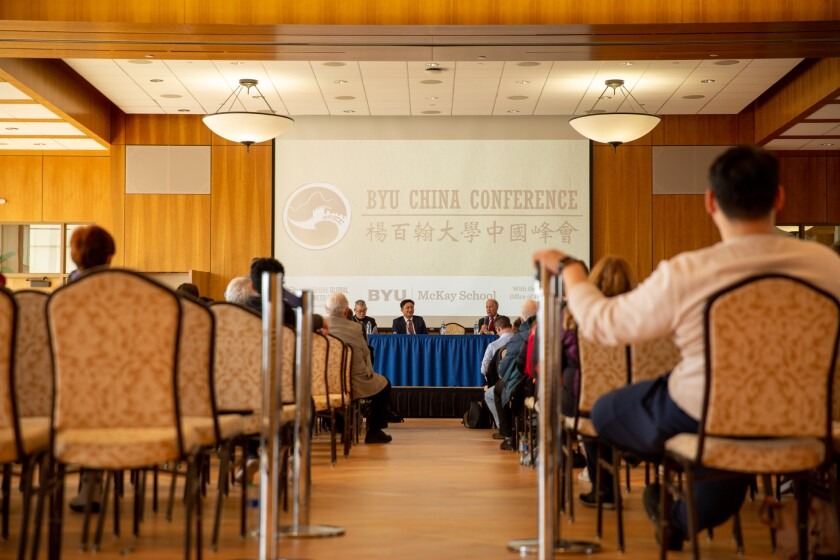
On March 11, 2023, BYU students, faculty, and members of the Chinese community united for the highly anticipated BYU China Conference. This annual event featured academic and diplomatic speakers, including Xiaofeng Wang, counselor of the Embassy of the People’s Republic of China in the United States of America. Attendees were treated to insightful presentations, a networking luncheon, and an engaging question-and-answer panel session.
Advertisements
Since its establishment in 2015, the conference has been dedicated to promoting the core values of BYU: faith, lifelong learning, and service – all while fostering an inclusive community. Its primary goal is to provide educational, professional, and cultural opportunities that strengthen the bonds between the United States and China. The conference is organized and hosted by a student committee. It is overseen by an advisory board consisting of faculty and staff from various departments, including the College of Humanities Chinese Flagship Center and the Center for Language Studies.
Photo by Kurk Fullmer, BYU
Advertisements
Adjunct Associate Professor Peter Chan, Chair of the advisory board, commended the exceptional work of the student committee, emphasizing their professionalism, dedication, and collaborative spirit.
Each year, the conference invites speakers from both the BYU community and esteemed Chinese associates. These experts cover a wide range of topics, like demographics, business and finance, politics, history, and current events. Notable speakers in 2023 included Counselor Wang, Changyun Kang (Associate Dean at Beijing Normal University), and Zhihong Yi (Professor of Finance and former Vice President of Renmin University of China).
Additionally, three speakers from BYU also presented: Robert Griffiths (political science adjunct faculty in the College of Family, Home, and Social Sciences and former consul general at the US Consulate General in Shanghai), Renata Forste (International Vice President of BYU), and Kirk Larsen (Associate Professor of History in the College of Family, Home, and Social Sciences).
The overarching theme of the 2023 conference centered on fostering friendly international relations between China and the United States, exploring the past, present, and future while highlighting the importance of a liberal approach to education in China.
Advertisements
Attending as a member of the Chinese Flagship Program, BYU student Alex Keogh expressed his appreciation for the conference’s diplomatic focus, emphasizing the significance of cross-cultural understanding. Keogh recognized the positive atmosphere that emphasized collaboration, effective communication, and mutual understanding.
The BYU China Conference serves as a platform for fostering understanding and forging connections, with attendees often referred to as “young ambassadors” by the speakers. This inclusive event takes place every winter semester, and individuals from all backgrounds are welcome to participate, regardless of their language experience.
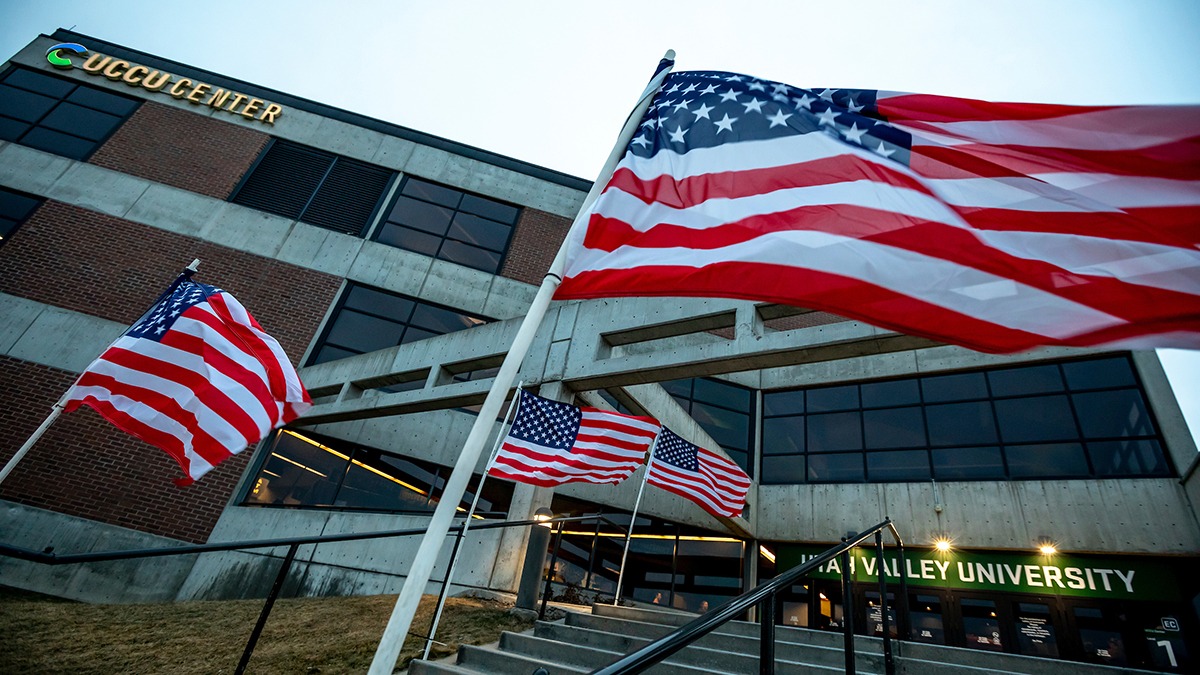
Utah Valley University (UVU) has been honored with a prestigious Top 10 Military Friendly School designation by Military Friendly, an esteemed organization that assesses a school’s dedication, initiatives, and accomplishments in creating sustainable and valuable opportunities for the military community.
Advertisements
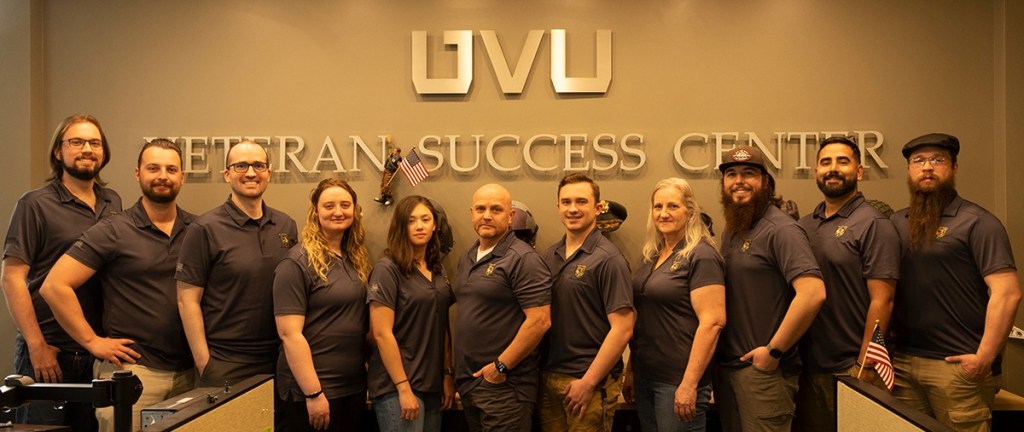
“This recognition reflects many hours invested by our team and other UVU partners to create an exceptional experience for our military-connected students,” says Kayle Smith, interim director of UVU Veteran Success Center.
Employing a comprehensive methodology that incorporates public data sources, proprietary surveys, and firsthand input from veterans, Military Friendly evaluates institutions across multiple categories, including academic policies, admissions procedures, cultural commitment, financial aid, graduation and career support, as well as military student assistance and retention.
UVU, in line with this methodology, has achieved a remarkable Gold rating, securing an impressive fifth-place ranking among Large Public universities nationwide.
Advertisements
The university’s Veteran Success Center plays a pivotal role in ensuring the smooth transition and success of student veterans, service members, and their dependents throughout their educational journey, from enrollment to graduation. Since its establishment in 2015, the center has provided invaluable guidance to approximately 800 military veteran students and 2,400 military dependents, enabling them to maximize their military benefits in funding their education at UVU.
To learn more about the UVU Veteran Success Center, visit uvu.edu/veterans.
BYU graduate programs continue to impress as the latest edition of the U.S. News & World Report graduate school rankings are unveiled. The J. Reuben Clark Law School at BYU achieved its highest ranking to date, solidifying its place among the top law schools in the nation.
Advertisements
In the 2023-2024 rankings, BYU Law soared to No. 22 among all law schools, surpassing its previous best performance. Additionally, the Marriott School of Business demonstrated remarkable progress, climbing to No. 35 among MBA programs.
While BYU Law and BYU’s MBA program take the spotlight, seven total BYU graduate programs secured positions in the Top 100 across their respective fields. It’s important to note that the U.S. News & World Report primarily focuses on graduate programs, excluding undergraduate rankings from this list. Here are the notable rankings for BYU’s graduate programs:
BYU Marriott’s expertise also received recognition in specialty graduate program rankings. Notably, it claimed No. 4 in Accounting, No. 19 in Leadership, and No. 23 in both Entrepreneurship and Non-Profit Management. Similarly, the Law School earned impressive rankings in various specialties:
No. 17: Business/Corporate Law
No. 31: Tax Law
No. 38: Contracts/Commercial Law
No. 48: Constitutional Law
Furthermore, several engineering programs at BYU earned positions in the Top 100 within their respective categories:
No. 77: Civil Engineering
No. 79: Computer Engineering
No. 80: Mechanical Engineering
No. 90: Chemical Engineering
No. 100: Electrical Engineering
The U.S. News & World Report has been publishing annual college and university rankings since 1983. The organization meticulously evaluated over 10,000 graduate programs and specialties during the ranking process. These rankings consider expert opinions on program excellence, alongside statistical indicators that gauge the quality of a school’s faculty, research, and students.
A new agreement between Snow College and Utah Valley University (UVU) is set to benefit students in good academic standing who seek to further their education. Under this agreement, Snow College students who successfully complete an associate degree or earn 60 credits toward third-year status will be granted acceptance into UVU’s Integrated Studies Program.
Advertisements
UVU, an open-enrollment institution, will automatically recognize Snow College’s general education foundations course as fulfilling its own knowledge integrated (IS 2000) requirement. This arrangement provides students with the opportunity to immediately embark on their third year of studies.
Heather Holland, assistant professor of English at Snow College, is the brain behind this collaborative effort. As a UVU integrated studies graduate herself, she views this agreement as a testament to the value of teamwork within Utah’s System of Higher Education (USHE). “Holland believes that the agreement will enable interested students to seamlessly transition to UVU and continue their educational journey. “This will allow students who are interested to make a seamless transfer to UVU and continue their education,” she says.
Heather Holland. Faculty headshot courtesy of Snow College.
Advertisements
UVU has also forged agreements with other educational institutions. For instance, there is a fast-track program that expedites UVU students into the University of Utah’s Master of Healthcare Administration program, accompanied by access to scholarships. Additionally, UVU has partnered with Mountainland Technical College to facilitate the transfer of credits from MTECH licensed practical nurse graduates into UVU’s Nursing Program.
“All of the agreements are good news for students,” said Frederick H. White, director of UVU’s Integrated Studies Program. “The agreement with Snow College allows for direct access into the Integrated Studies Program at UVU, which offers students a unique opportunity to create their own degree for their specific career goals. Students select two minors out of more than 70 offered at the university and combine these minors in meaningful ways through a capstone paper or project at the end of their academic career. We are excited to admit Snow College students into our program and accelerate their education.”
These agreements represent a step forward for students, providing them with enhanced opportunities and streamlined pathways toward their desired educational and career outcomes. The collaborative efforts within Utah’s System of Higher Education serve as a promising example of how institutions can work together to benefit the broader student community.
BYU Theatre recently unveiled its complete lineup of performances for the next season, featuring two shows each in October and November, one in March and April, and an additional spring show.
Advertisements
The upcoming shows will take place in the BYU West Campus theaters, namely the West Campus Mainstage Theatre, West Campus Studio Theatre, and West Campus Black Box Theatre. These venues have become the primary locations for performances since the closure and demolition of the long-standing Harris Fine Arts Center, a prominent fixture in campus performing arts community for over a generation.
The October productions will include Wait Until Dark and the Microburst New Play Festival. Wait Until Dark made its Broadway debut in 1966, was adapted into a film starring Audrey Hepburn in 1967, and was last performed at BYU in 1987. The play revolves around a blind housewife who becomes the target of three con men due to the criminal activities of her deceased husband.
The Microburst New Play Festival is an annual event that showcases student writing and performances, providing a platform for young artists and introducing audiences to “the next generation of playwrights who will change the world.”
Michael Ballif as Julius Caesar during BYU’s 2021 season. Photo by Jaren Wilkey/BYU
Advertisements
November’s shows include the children’s classic The Secret Garden and The Boy at the Edge of Everything. March will bring the production of The House of Desires, written by 16th-century Mexican poet and nun Sor Juana Inés De La Cruz. This will be the play’s debut performance at BYU.
In April, audiences will have the opportunity to enjoy The Tempest. The final show of the spring season will be Blithe Spirit, a play by Noël Coward that explores a socialite’s encounter with a seance gone awry. Spooky.
Stephanie Breinholt, Artistic Director of BYU Theatre, expressed excitement about the new season, stating, “After an incredibly successful inaugural season in the West Campus venues, BYU Theatre is tailoring its 2023-2024 season to these innovative new spaces and collaborating with our resilient and creative students and faculty. The upcoming season will explore a wide range of genres and styles.”
Season tickets will go on sale Wednesday, May 24 and can be purchased online or in person at the Marriott Center box office.
Engineering students at Brigham Young University (BYU) have achieved a remarkable feat by constructing the most fuel-efficient vehicle not only in the United States but also across the Americas. Their creation, known as a Supermileage vehicle, can travel an astounding distance of 1,915.83 miles per gallon. This remarkable achievement earned them the first-place title at the prestigious Shell Eco-marathon, an international competition that brings together teams from North and South America to develop the most fuel-efficient vehicles on the planet.
Advertisements
The Shell Eco-marathon took place at the Indianapolis Motor Speedway, a distance of 1,531 miles from Provo, where BYU is located. BYU’s car could have easily coasted to Indianapolis on less than a gallon of gas. Despite its remarkable fuel efficiency, the vehicle can only reach a maximum speed of 25 miles per hour. However, for the BYU Supermileage Team, speed is not the focus; their goal is to excel in long-distance efficiency.
Photo by Brooklynn Jarvis/BYU Photo
Advertisements
Throughout the competition, BYU’s car consistently outperformed other vehicles, surpassing the second-place car by over 100 miles per gallon. BYU had previously participated in the Eco-marathon but had not competed for four years due to the pandemic. Given their absence, the team’s expectations were modest. However, they devoted themselves wholeheartedly to the competition, demonstrating unwavering focus and determination.
Overall, the BYU Supermileage Team’s triumph at the Shell Eco-marathon showcased their remarkable engineering skills, teamwork, and problem-solving abilities. Their accomplishment not only earned them recognition as the best in the country but also solidified their position as the leading fuel-efficient vehicle builders on this side of the globe.