Categories
State News

Utah Blocks Land Sale Near Provo Airport to Chinese-Owned Company

Advertisements

By Mike Romero

Utah Governor Spencer Cox announced this week that state officials blocked a Chinese state-owned company from purchasing land near the Provo Airport.

According to Cox, the company involved was Cirrus Aircraft, which is majority-owned by the Aviation Industry Corporation of China (AVIC). AVIC is a restricted foreign entity under Utah law due to its connections to China’s military and its presence on multiple U.S. federal watch lists.

Cirrus Aircraft, originally an American company, manufactures small private aircraft. It was acquired by AVIC’s subsidiary in 2011. While Cirrus is not a military contractor, some analysts have raised concerns that its technology could benefit China’s military.

State officials did not disclose how much land was involved or its exact location. The Department of Public Safety said it was notified of the proposed purchase in early 2025. The sale was stopped under Utah’s HB516 law, which restricts land ownership by entities tied to China, Russia, Iran, and North Korea.

County recorders are required to report suspicious transactions. Officials said the local recorder flagged this attempt, which led to the intervention.

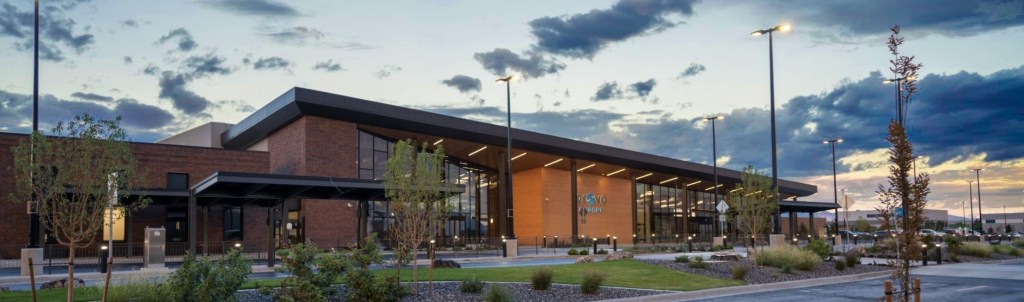
Provo Airport. Photo courtesy of Provo City Government.

Governor Cox emphasized that Utah’s laws are designed to prevent foreign adversaries from acquiring strategic land. He said the blocked sale demonstrates the effectiveness of recent legislation aimed at national security concerns.

Cox also addressed claims about the extent of Chinese land ownership in Utah. He said about 33,000 to 37,000 acres were previously owned by Chinese companies but that most of this land has been divested, leaving only a small amount under Chinese ownership.

Advertisements

Utah has also closed Confucius Institutes at state universities due to similar concerns about foreign influence. Lawmakers say they plan additional legislation related to critical resources like water and minerals.

Cox linked the issue to broader concerns about religious freedom, citing China’s recent closures of congregations of The Church of Jesus Christ of Latter-day Saints in Beijing. He said Utah will continue to oppose foreign efforts to limit religious freedom or gain leverage through economic deals.

Utah officials said their approach has drawn interest from other states and has been recognized by national defense organizations as a model for monitoring foreign land ownership.

Cox concluded that Utah will keep enforcing its restrictions to prevent foreign entities with ties to adversarial governments from acquiring land that could affect state security, infrastructure, or economic independence.

Advertisements
Categories
Provo City News

How Much Would It Cost To Pump Ocean Water Into The Great Salt Lake?

Advertisements

By Richard Provost

Turns out, pumping just one third of the water we need to save the Great Salt Lake would require 400 megawatts of electricity. For reference, that’s 11% of the energy the state of Utah uses in a single year.

In a new study from the Ira A. Fulton College of Engineering at Brigham Young University, BYU engineers have analyzed how much energy and money would be required to save the Great Salt Lake by transporting water in from the Pacific Ocean through a single large-diameter pipeline.

Advertisements

In addition to using 400 megawatts of electricity, it would also require $300 million dollars a year to operate (on top of the multibillion-dollar cost to build a pipeline) and would emit nearly one million metric tons of carbon dioxide (or 200,000 passenger vehicles) each year. BYU’s Todd Hollingshead reported that these are very conservative estimates. The pipeline would have to pump water 600 miles inland while gaining 4,200 feet of elevation.

BYU’s Rob Sowby. Photo courtesy of BYU Photo.

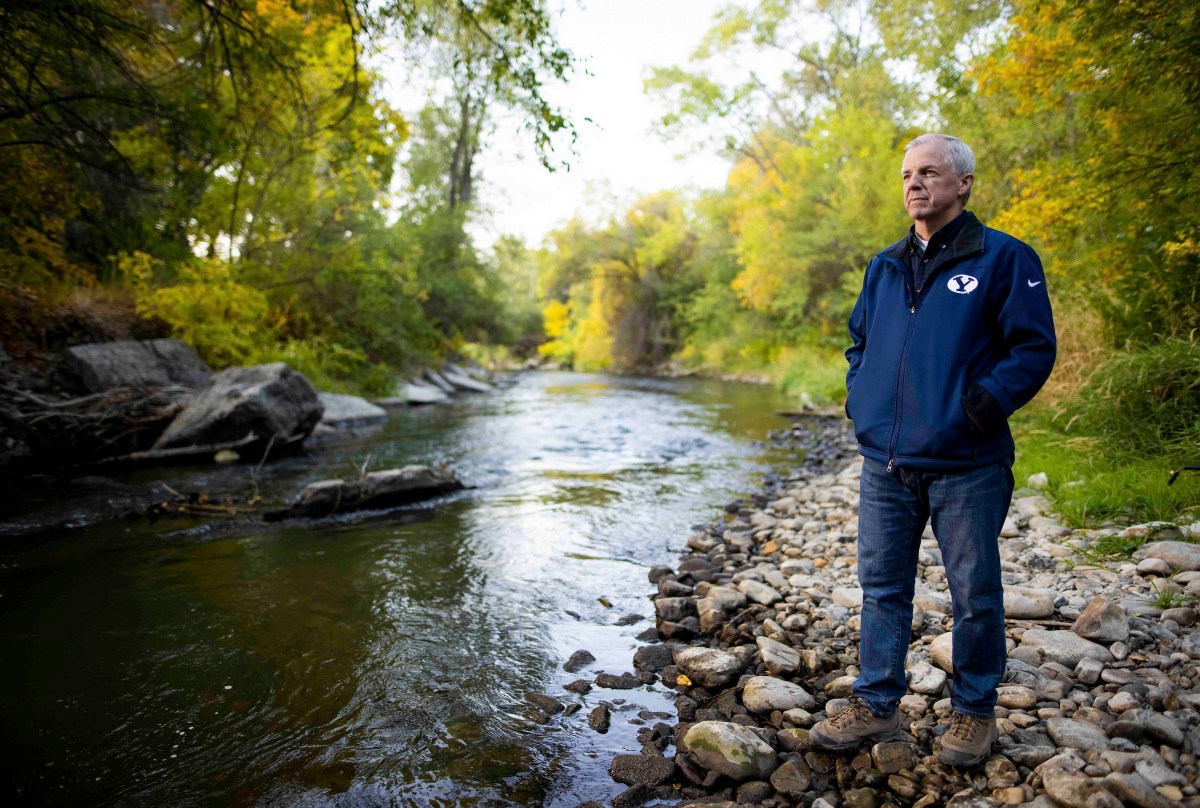
“The figures could easily triple with a longer pipeline route, mountainous terrain, higher flows, multiple pipelines or less efficient pumps,” said Rob Sowby, BYU professor of civil engineering and lead author on the analysis. “To put it mildly, there are serious challenges to this approach.”

Advertisements

TLDR: we’d save the Great Salt Lake but would worsen our inversion problem and incur serious financial costs.

Sowby worked on this analysis with BYU professors Gus Williams and Andrew South. “While the idea sounds extreme, so are the circumstances, some argue, and all options should be kept open,” Williams said. “That said, we’re not providing an opinion on the necessity or feasibility of such a project; our analysis is to inform Great Salt Lake stakeholders, decision makers and the public on what the costs could be.”

“After years of neglect, the Great Salt Lake is starving not just for water but for attention,” Sowby said. “Facing an environmental crisis, we are compelled to rethink our relationship with the Great Salt Lake, to treat it like the precious asset it is rather than as a casual afterthought.”

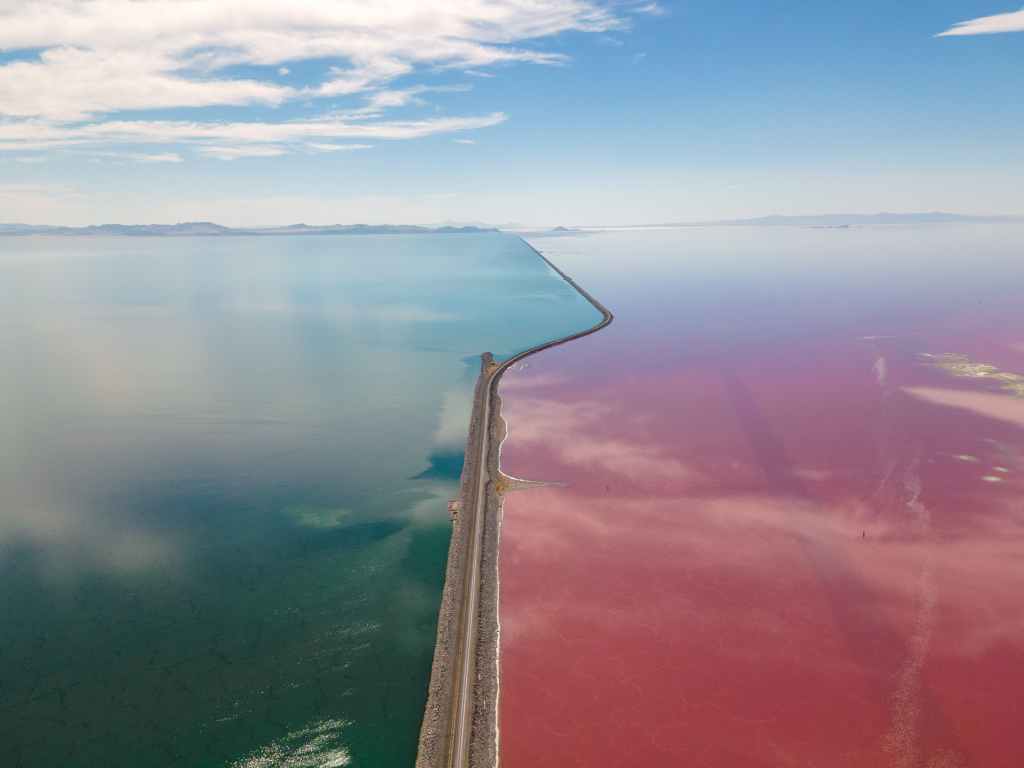
The road leading across the Great Salt Lake from Promontory Point. Photo by Urvish Oza.
Advertisements
Categories
Provo City News

New Pedestrian Bridge Opens in Downtown Provo

Advertisements

By Mike Romero

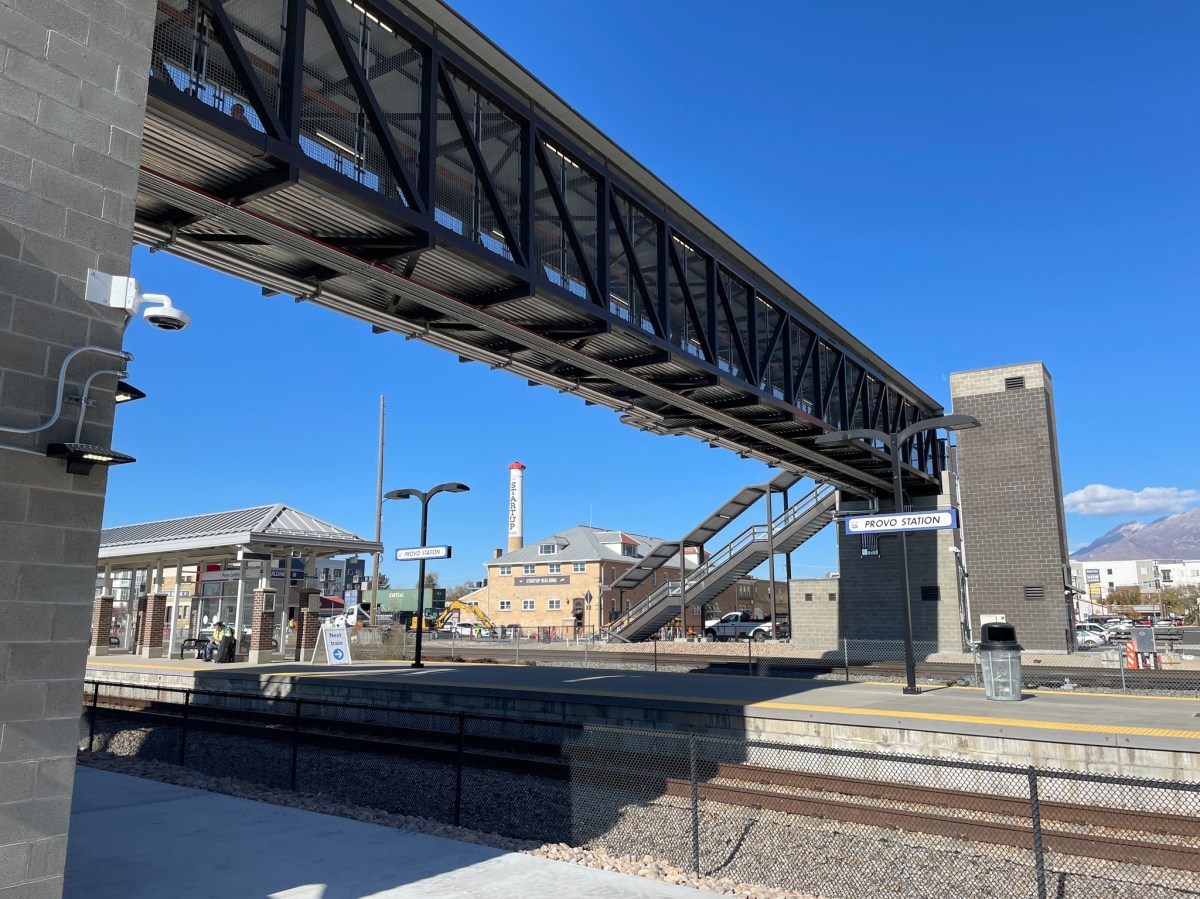
After months of construction, the Utah Transit Authority has opened the new pedestrian bridge at Provo Central Station. The public celebrated its opening in a ribbon-cutting ceremony yesterday, November 14.

This news is brought to you in part by Spengler Industries.

The goal of the bridge was to improve safety, air quality, and to more efficiently connect downtown Provo to the broader public transportation network. While the bridge is operational, elevators within the structures are not yet usable. They’re still pending inspections from state government.

It cost roughly $7 million to build the bridge. 35% was paid by federal funding and 65% was paid by local sources. The bridge spans two FrontRunner tracks and two Union Pacific Railroad lines near 600 South and 100 West in Provo, Utah. It’s 145 feet long.

For pedestrians, this area is often blocked by trains. This makes crossing difficult, dangerous, and at times impossible. This bridge addresses those challenges.

Photo courtesy of Provo City.
Advertisements
Categories
University News

BYU Graduate Programs Garner Top Rankings in 2023-2024 U.S. News & World Report

Advertisements

By Mike Romero

BYU graduate programs continue to impress as the latest edition of the U.S. News & World Report graduate school rankings are unveiled. The J. Reuben Clark Law School at BYU achieved its highest ranking to date, solidifying its place among the top law schools in the nation.

Advertisements

In the 2023-2024 rankings, BYU Law soared to No. 22 among all law schools, surpassing its previous best performance. Additionally, the Marriott School of Business demonstrated remarkable progress, climbing to No. 35 among MBA programs.

While BYU Law and BYU’s MBA program take the spotlight, seven total BYU graduate programs secured positions in the Top 100 across their respective fields. It’s important to note that the U.S. News & World Report primarily focuses on graduate programs, excluding undergraduate rankings from this list. Here are the notable rankings for BYU’s graduate programs:

  • No. 22: Law
  • No. 35: MBA
  • No. 57: MPA
  • No. 63: Speech-Language Pathology
  • No. 86: Mathematics
  • No. 89: Nursing
  • No. 97: Computer Science
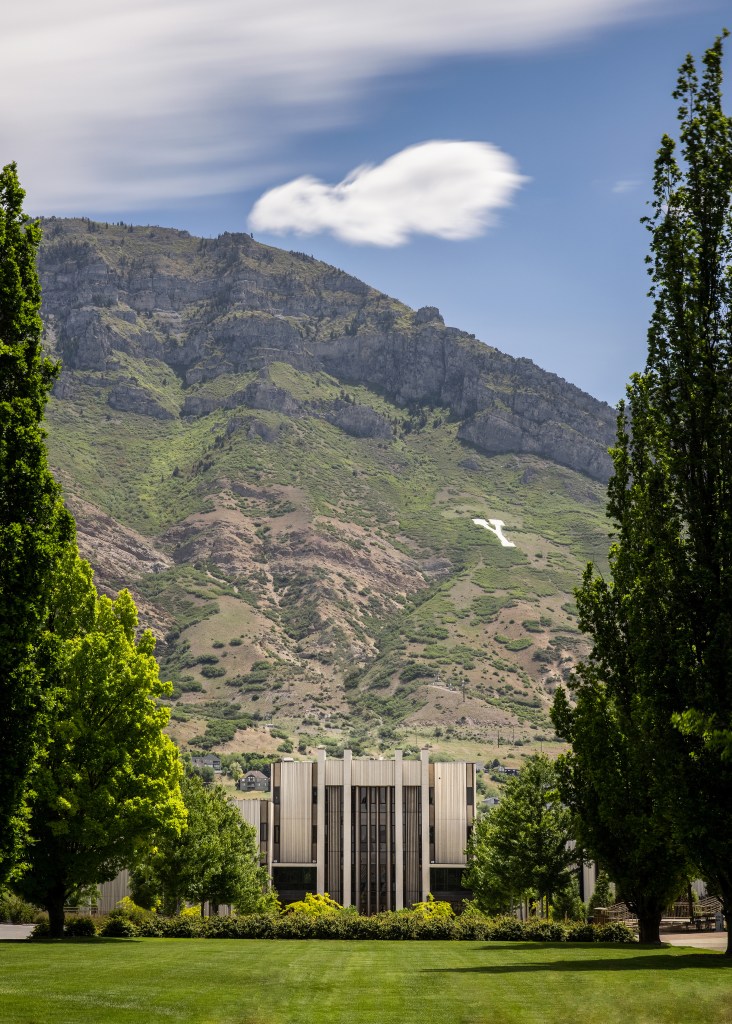
J. Reuben Clark Building on BYU Campus. Photography by Carter Bennett/BYU © BYU PHOTO 2020
Advertisements

BYU Marriott’s expertise also received recognition in specialty graduate program rankings. Notably, it claimed No. 4 in Accounting, No. 19 in Leadership, and No. 23 in both Entrepreneurship and Non-Profit Management. Similarly, the Law School earned impressive rankings in various specialties:

  • No. 17: Business/Corporate Law
  • No. 31: Tax Law
  • No. 38: Contracts/Commercial Law
  • No. 48: Constitutional Law

Furthermore, several engineering programs at BYU earned positions in the Top 100 within their respective categories:

  • No. 77: Civil Engineering
  • No. 79: Computer Engineering
  • No. 80: Mechanical Engineering
  • No. 90: Chemical Engineering
  • No. 100: Electrical Engineering

The U.S. News & World Report has been publishing annual college and university rankings since 1983. The organization meticulously evaluated over 10,000 graduate programs and specialties during the ranking process. These rankings consider expert opinions on program excellence, alongside statistical indicators that gauge the quality of a school’s faculty, research, and students.

Advertisements
Categories
Provo City News

Provo Band Wins NPR’s Tiny Desk Competition

Advertisements

By Mike Romero

On May 16, 2023, NPR Music made an announcement during Morning Edition revealing the winner of the ninth edition of their Tiny Desk Contest: Little Moon. The victorious band is composed of Provo locals. They’ll have the opportunity to perform at NPR’s Tiny Desk before heading out on the Tiny Desk Contest On The Road tour.

Advertisements

The band is made up of Emma Hardyman (lead vocals/guitar), Nathan Hardyman (bass/guitar), Bly Wallentine (keys/bass), Bridget Jackson (harp), Chris Shemwell (drums), and Grace Johnson (electric guitar/keys). Little Moon was chosen from an impressive pool of nearly 6,000 submissions representing all 50 states, Washington, DC, the US Virgin Islands, and Puerto Rico.

The Tiny Desk Contest On The Road tour will return in 2023. This victory tour, which has expanded to eight cities this year, provides an opportunity to witness Little Moon’s live performances alongside a showcase of vibrant local music. Additionally, two local Contest acts will join the lineup in most cities.

Read the full story at ProvoMusicMagazine.com.

Make sure to follow Little Moon on Instagram and check out “Wonder Eye” Below!

Advertisements