Election season is upon us. Part of our mission at The Provo Tribune is to help Provo citizens to become active, informed voters who are anxiously engaged in building their community. To further this mission, we’re highlighting every candidate running for Provo City Council this year. These features do not constitute an endorsement, and are done as a public service for the community.
Who is Craig Christensen?
Craig Christensen has lived in Provo for over three decades. He has seen Provo grow over the course of 30 years, and he strongly believes that he understands Provo’s needs.
Before starting a family, Craig attended Brigham Young University and received a bachelor’s degree in English. Soon after, he earned an MBA from Harvard Business School. After attending Harvard, Craig and his wife Susan decided to settle in Provo to raise a family.
Advertisements
Craig has since started four businesses, creating hundreds of local jobs. He understands the challenges faced by local business owners and has firsthand experience in fostering economic growth and job creation.
With more expansive growth coming to Provo, Craig believes that changes should be made within reasonable parameters to preserve the city’s unique charm, history, natural surroundings, and residents’ interests.
As a firm believer in the principles of stewardship, Craig has successfully led efforts to save Utah Lake and Bridal Veil Falls from being developed. This has allowed him to gain valuable experience advocating for his neighbors and his community.
If elected, Craig will focus on common sense growth, a business-friendly environment, and the preservation of open spaces that make Provo home.
A satellite image of Hurricane Hilary. Photo courtesy of the US National Oceanic and Atmospheric Administration.
Advertisement.
By Charlie G. Patreus
Hurricane Hilary, labeled a Category 4 storm over the weekend, triggered a tropical storm watch in parts of southern California for the first time. California and Nevada anticipate heavy rain from the storm’s movement across the Southwest. Utah’s impact remains uncertain, but heavy rain and thunderstorms are expected. Thunderstorms have already begun to occur in Provo, Springville, and Spanish Fork.
Advertisements
As moisture from Hilary heads north into the desert areas of the Southwest, flooding concerns are heightened. Hilary’s heavy rain is already flooding Mexico’s Baja California and bringing hurricane force winds to southern California. They’re starting to move northward.
Utah could face monsoon surges, primarily in southern Utah. Cedar City experienced flooding last Thursday evening. Heavy rain across the state is expected by Saturday. Intense rain might occur in central and eastern Utah. It remains to be seen how much water this storm will add to Utah Lake and the Great Salt Lake.
Stay away from small streams, slot canyons, burned forests, and other places prone to flooding. If your neighborhood does flood, remember: “turn around, don’t drown.” Merely 6 inches of water can move a car. A foot of water can consume a car entirely and push it into a current. In the worst scenarios, this could be fatal. In the best scenarios, it requires help from first responders. Be safe out there.
The latest edition of The Princeton Review’s renowned “Best Colleges” rankings for 2024 has been unveiled, and Brigham Young University (BYU) has made the list. The annual rankings, now in their 32nd year, are produced by The Princeton Review, a prominent education services company. Unlike traditional rankings that rely solely on academic data and input from college administrators, The Princeton Review’s rankings are exclusively based on surveys completed by college students, providing an authentic reflection of their experiences.
Advertisements
Presented in 50 distinct categories since 1992, the “Best Colleges” lists spotlight 25 outstanding institutions in each category. These lists are accessible on PrincetonReview.com, and they are also published in the latest edition of The Princeton Review’s college guide, titled The Best 389 Colleges, published by Penguin Random House.
The data operations team at The Princeton Review processed a substantial 165,000 student surveys from The Best 389 Colleges. On average, this translates to approximately 424 surveys per school. The surveys were administered over the academic years 2022-23 and the two preceding years, with students offering insights into their professors, campus amenities, administrative support, financial aid, and various other aspects of their college lives. Detailed information about the survey methodology and ranking criteria is available on PrincetonReview.com.
This year, Brigham Young University was awarded the top spot in the Best Library category, solidifying its reputation as the premier destination for library resources in the nation. BYU also ranked #1 in another (less surprising) category: Most Religious Students.
The FBI was recently involved in the death of Provo citizen Craig DeLeeuw Robertson. New reports indicate Robertson pointed a gun at agents before being shot and killed on Wednesday, August 9.
Advertisements
Robertson was armed with a .357 revolver, according to court documents. The incident occurred hours before President Joe Biden arrived in Salt Lake City – around 6:15 AM. The confrontation occurred as FBI agents approached him to deliver an arrest warrant for three felonies.
“The FBI continues to review an agent-involved shooting which occurred around 6:15 AM on Wednesday, August 9, 2023 in Provo, Utah,” said FBI Spokesperson Sandra Barker in a statement. “The incident began when special agents attempted to serve arrest and search warrants on 75-year-old Craig Deeleuw Robertson at his home for threats to elected officials and law enforcement officers. Robertson resisted arrest and as agents attempted to take him into custody he pointed a .357 revolver at them. The FBI takes all shooting incidents involving our agents or task force officers seriously. In accordance with FBI policy, the shooting incident is under review by the FBI’s Inspection Division. We have no further details to provide at this time.”
Age 75, Robertson was an active member of The Church of Jesus Christ of Latter-day Saints. His behavior on social media prompted intervention by law enforcement. He posted threats against New York County District Attorney Alvin Bragg (who was the first to indict former President Donald Trump); President Biden; and the FBI agents in contact with Robertson.
“I hear Biden is coming to Utah. Digging out my old ghillie suit and cleaning the dust off the m24 sniper rife [sic]. Welcome, Buffon-in-Chief [sic],” Robertson posted days before the president’s arrival in the state. As an Air Force Veteran in possession of the firearms discussed, this threat was taken seriously.
Robertson’s family released an official public statement on Facebook regarding his death.
“We, the family of Craig Deeluew Robertson, are shocked and devastated by the senseless and tragic killing of our beloved father and brother, and we fervently mourn the loss of a good and decent man,” the statement said.
The family said they “hold no animosity” to any individuals involved in the incident. They described Robertson as a kind and caring person, and didn’t believe he would ever harm another individual.
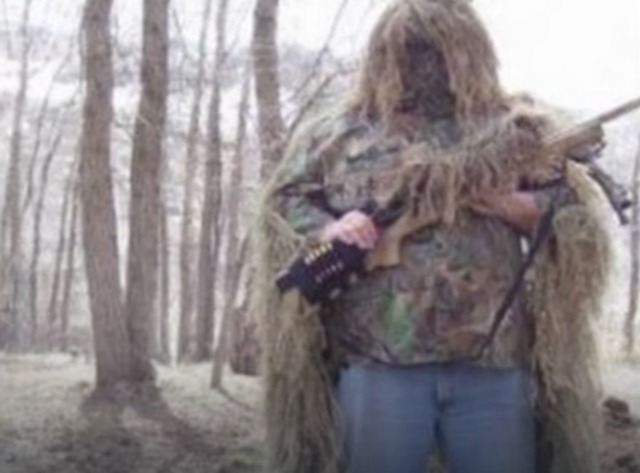
Craig Robertson wearing a ghillie suit in an undated Facebook photo.
“He (Robertson) was understandably frustrated and distraught by the present and on-going erosions to our constitutionally protected freedoms and the rights of free citizens … As an elderly – and largely homebound – man, there was very little he could do but exercise his First Amendment right to free speech and voice his protest,” the statement said.
Family and friends of Robertson asked the media and general public for privacy while they grieve and “come to terms with the sad tragedy of these events.”
The shooting is still under review by the FBI’s Inspection Division, and Biden left Utah on Aug. 10 without incident.
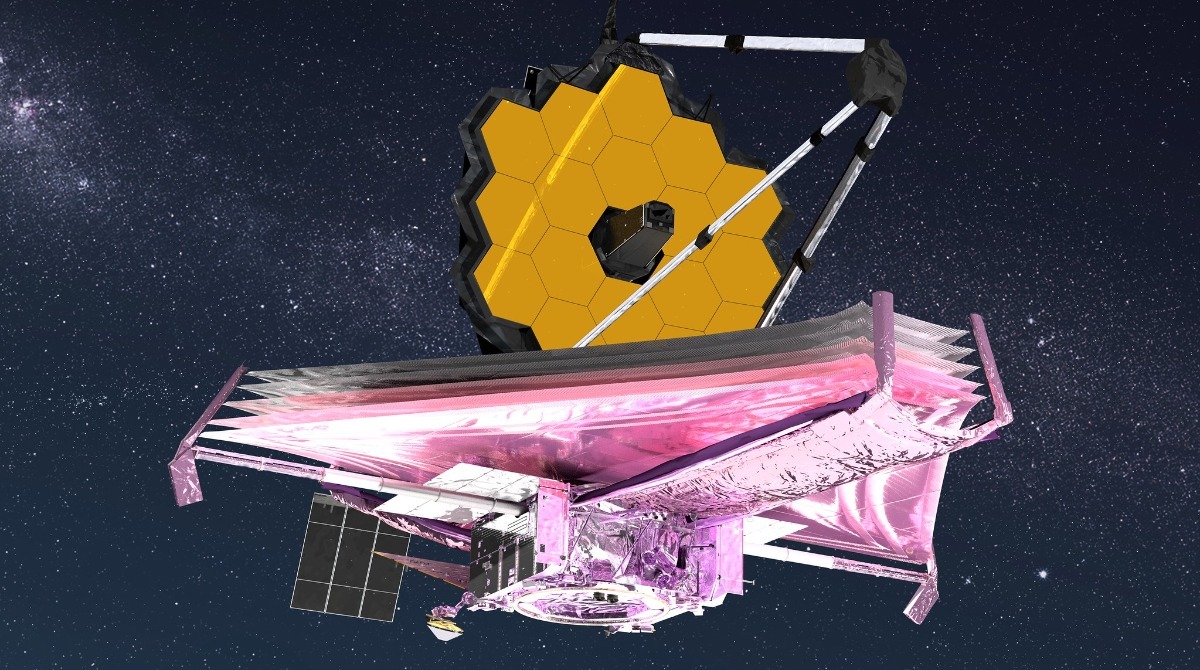
Photos courtesy of NASA, Space Telescope Science Institute
Advertisements
By Mike Romero
In a remarkable achievement, Utah Valley University science professor Joshua Lothringer helped an international team of planetary researchers discover carbon dioxide (CO2) on an exoplanet. It’s located an astonishing 700 light-years away from Earth. Employing NASA’s state-of-the-art James Webb Space Telescope (JWST), this revelation has potential compelling ramifications for our understanding of distant planetary systems.
Advertisement.
How did they pull this off? Through meticulous observation orchestrated by Lothringer and his fellow scientists. By intently focusing the JWST on a remote star and closely tracking its luminosity over time, a dimming pattern emerged. This phenomenon was the telltale sign of an exoplanet, known as Hot Jupiter WASP-39b, casting a shadow as it passed between the star and the telescope.
The light emitted by stars near the exoplanets that orbit them presents a formidable challenge to direct observation. But infrared cameras, similar to the tech behind night vision technology, track variations in the infrared spectrum emanating from these faraway worlds.
Lothringer’s job was to determine if carbon dioxide was present on the planet. Gases absorb light in distinct fashions, manifesting in discernable color combinations. Carbon dioxide, in particular, absorbs a specific wavelength of red infrared light, a phenomenon that escapes the naked eye. Infrared cameras decode this crucial information.
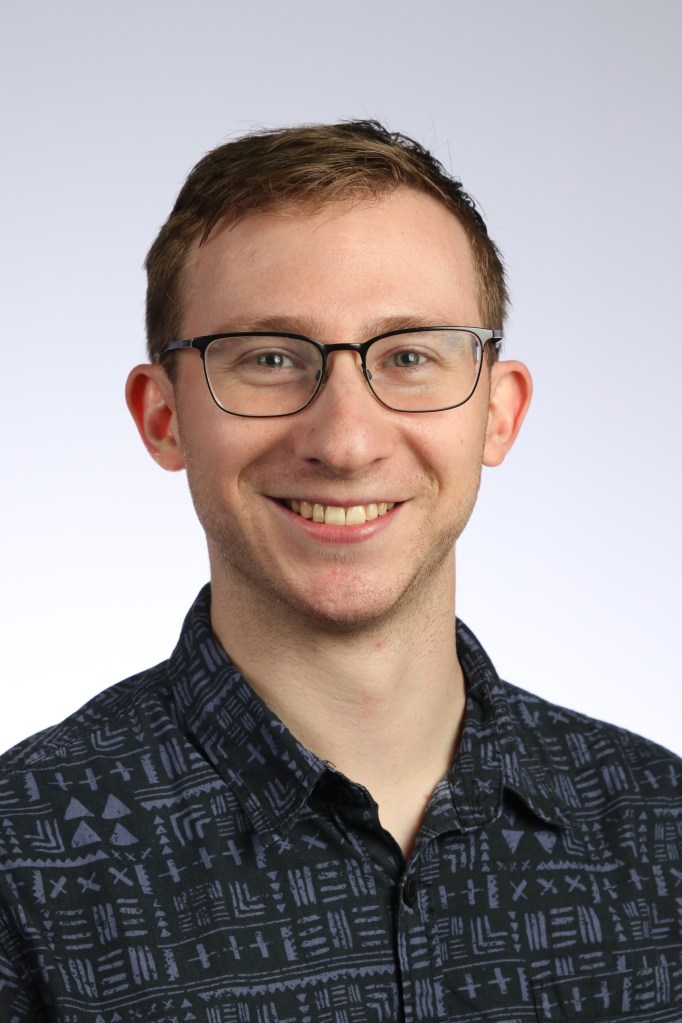
Joshua Lothringer of UVU
Lothringer used sophisticated computer programs and algorithms to document the light spectrum. “It took months to assemble and sort the data,” said Lothringer about finding CO2. “It is a painstaking process because the wavelengths of the light are measured between 3 and 5.5 microns, and the data has to be exact. However, when all was said and done, it was thrilling to know that we have this ability and that we are contributing to a science that will hopefully someday lead us to habitable planets.”
WAS stands for “Wide Angle Search for Planets.” Scientists use number and letter designations coupled with the WASP descriptions to keep track of the exoplanets.
Lothringer worked with more than 100 other scientists, who, in addition to CO2, found water vapor, sodium, and potassium in the atmosphere. These findings establish a foundation pivotal for the exploration of smaller, potentially habitable planets. This is especially relevant, given recent congressional discussions surrounding the possibilities of extraterrestrial life.
A 24-year-old Brigham Young University student has announced his candidacy for Provo City Council’s City-Wide seat. His name is Tanner Bennett. Running what he calls a “$0 campaign,” his strategy involves taking no donations and instead encouraging people to give back to the community.
Bennett’s campaign centers around what he calls the “silent 50%.” This group consists of individuals between the ages of 18 and 30 who historically have low turnout in local elections and make up roughly half of Provo’s population and tax base.
Advertisement.
Bennett runs his $0 campaign primarily on social media (@bennett_for_provo). His efforts have already led to thousands of dollars in material and monetary donations to organizations like Food and Care Coalition and Community Action Services and Food Bank.
We asked why he decided to use this approach instead of traditional campaign funding approaches. “I believe it is a politician’s job to serve, educate, and uplift their community,” Bennett says. “I think it’s ridiculous to take thousands of dollars to run when there is so much that could be done with that money to meet others’ needs.”
Balancing his studies with a role as a global sales executive at a multimillion-dollar firm, Bennett brings a blend of youthful vigor and corporate leadership experience to his campaign. He also directs an International NGO fostering US-China relations. This has given him extensive experience in leading and directing non-profits, plus a unique understanding of government, nonprofit, and corporate spheres.
Bennett is running as an independent moderate, focusing on solutions instead of partisan politics. Bennett’s presence on social media has emphasized critical issues from both sides of the aisle while focusing on issues important to the “silent 50%.” These include housing, tenant rights, the well-being of vulnerable renters, and the inclusion of marginalized groups like the LGBTQ+ community. Bennett has made plans to do this all while working to balance resources, opposing higher taxes, and acting as a “careful steward of the citizens’ hard-earned tax dollars.”
“No one understands the value of a dollar better than a full-time student who refuses to take on debt,” says Bennett.
All individuals over 18 years old who have lived in Provo for 30 days or more are eligible to vote without needing a Utah driver’s license. Register to vote for Provo’s primary election today at vote.utah.gov. Provo’s primary election will be held from August 22 to September 5th, 2023.
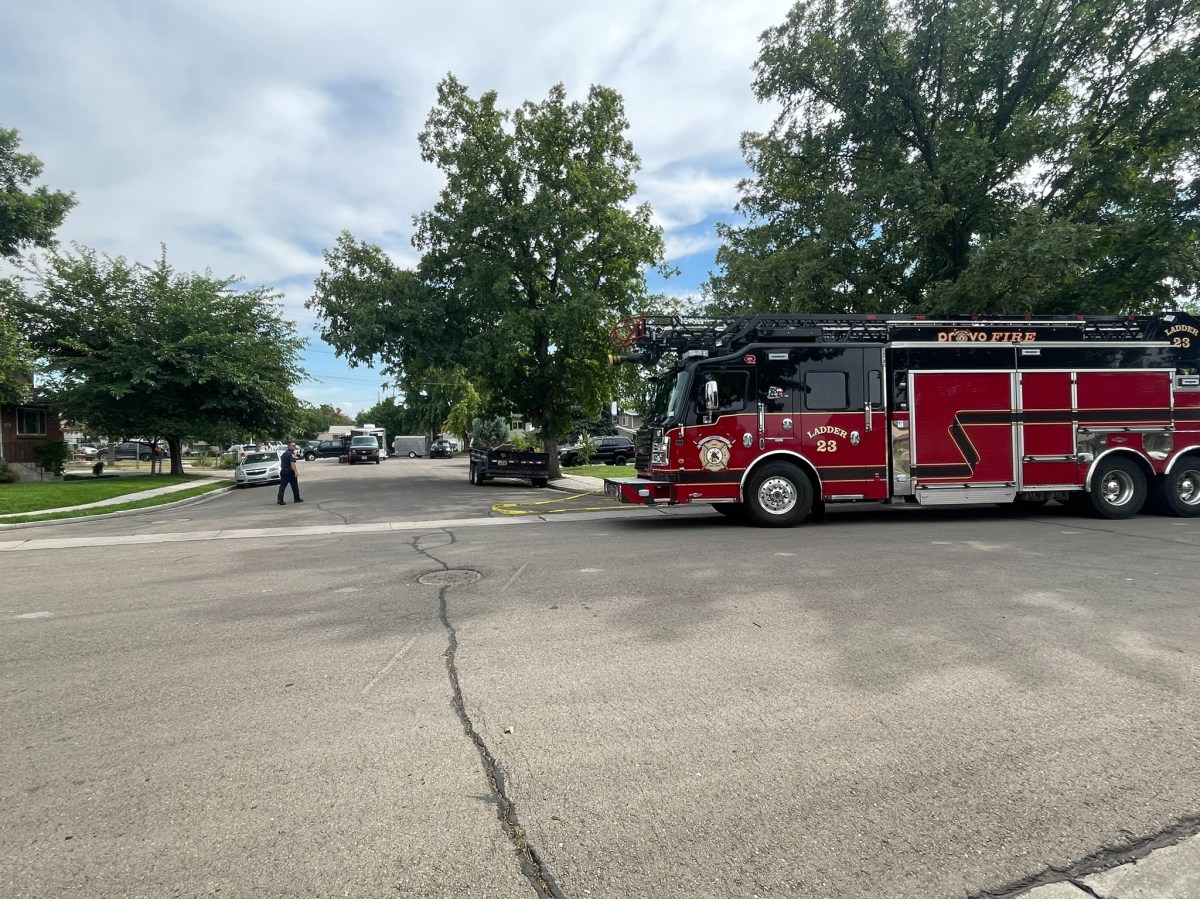
The scene after the shooting in Provo | Photo by Shelby Lofton (X: @newswithshelby)
Advertisements
By Richard Provost
An elderly man named Craig Robertson was shot and killed in his home in Provo on Wednesday, August 9, 2023. A frequent poster on social media, Robertson’s posts included threats toward President Joe Biden and Vice President Kamala Harris. Biden visited Utah this week ahead of his re-election campaign.
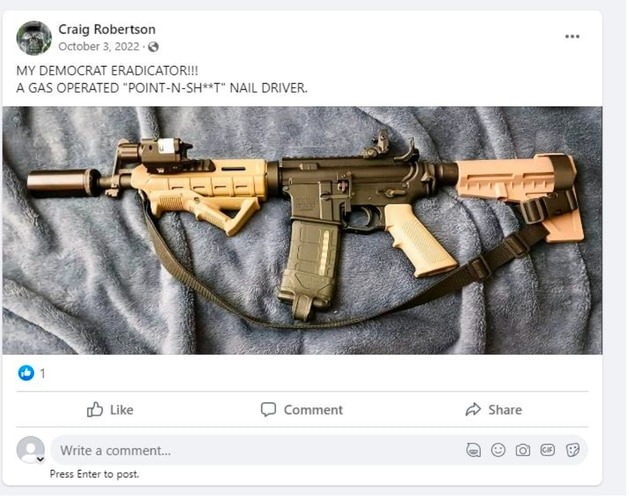
Robertson’s Facebook account showed multiple posts threatening violence. One example said Utah would become famous “as the place a sniper took out Biden the Marxist.” Robertson, a veteran, also frequently posted photos of his firearms.
The FBI contacted Robertson about his comments. He replied publicly on July 27 with this post: “Hey FBI, you still monitoring my social media? Checking so I can be sure to have a loaded gun handy in case you drop by again.” His Facebook profile has since been taken down.
The president was briefed by senior staff on the FBI shooting, a White House official said. No information about how the incident unfolded has been publicly released by law enforcement. CBS News reported that Robertson engaged FBI agents in a gunfight when they tried to serve a warrant.
A neighbor named Nyla Rollins said they called for Robertson to come out. “And he’s like, ‘I’m not coming out,'” she says, indicating he swore at the agents. “And then I didn’t hear anything after that.”
Robinson said he couldn’t tell whether there was an exchange of gunfire between the FBI and the suspect. “I just heard the five shots.” She recounted that the SWAT team went through his back door with a battering ram.
An official complaint included a 2009 photo of Robertson wearing camouflage gear and holding a rifle in the woods. Authorities say it shows that he had the ability to conduct sniper tactics. The list of threats on his social media profiles were long, graphic, and detailed.
On X (formerly Twitter), author Josef Miyasato had this to say: “Craig was a member of my local Church congregation. I’ve known him for the past 3 years, give or take. Craig would always sit on the pew next to the chapel door. He was a regular face in the congregation. My wife and I loved him.” He explained that he was always friendly and kind at church, but that Miyasoto never interacted with him online and didn’t know how violent his rhetoric was. “The Facebook-ranting, assassination-threatening person that has been revealed was not the Craig I knew. To say he crossed the line into the ugly space of unprotected speech is accurate. And I wish Craig would have never behaved like this. His posts are disturbing to say the least.”
The morning of the incident, Provo PD issued this statement: “Yesterday the Provo Police Department became aware that the FBI intended to serve a federal arrest warrant in Provo this morning. We did not contribute any personnel to the team that went to the house to serve that warrant. After the agent involved shooting happened this morning, our involvement has been limited to supporting the FBI while they conduct a continuing investigation.”
Orem is gearing up for election season! In 2023, 12 candidates are running for 3 available council spots. To help Orem citizens get informed about the candidates and their platforms, Orem City is holding a Meet the Candidates Night on Thursday, August 10 from 6-8 PM in Library Hall.
This is a unique opportunity to interact with fellow citizens running for office. There are few opportunities like this where all candidates are together in one room for open questions. The seats up for election in 2023 are currently held by Jeff Lambson, Terry Peterson, and Debby Lauret.
Candidates will address the audience for the first hour, explaining what they hope to accomplish on behalf of the city. The second hour will be an open house where the public can personally meet the candidates and ask them questions.
The 2023 candidates are: Crystal Muhlstein, Matt McKell, Greg Duerden, Chris Killpack, Jeff Lambson, Archie Williams III, Spencer Rands, Heather Fry, Jenn Gale, David Edward Garber, Mike Carpenter and Wade Sewell.
Ahead of the event, check out the videos Orem shot for each candidate here. You can see an example of one below.
Note: The inclusion of this candidate’s video does not indicate an endorsement, and is merely an example of what you can expect from the video series.
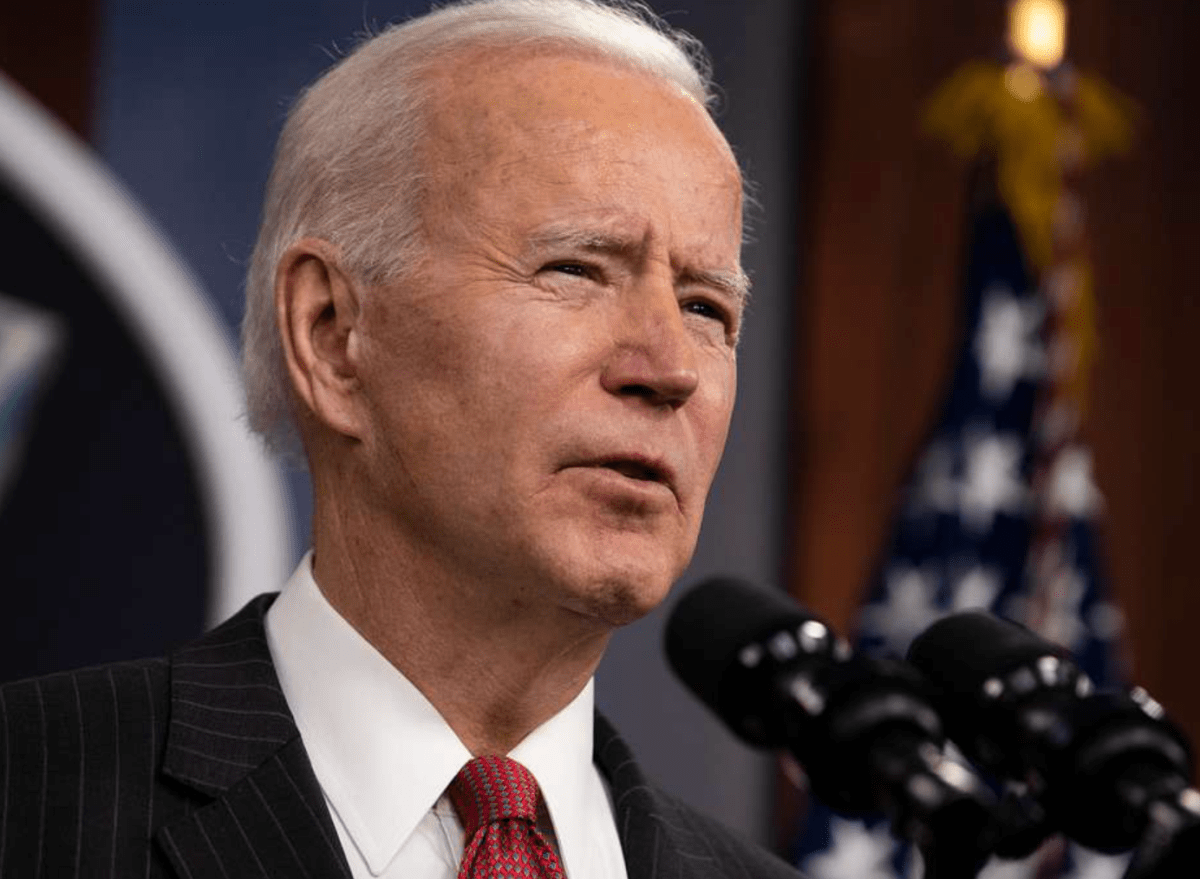
President Joe Biden, the 46th president of the United States of America, is visiting Deseret territory after a tour of the Southwest. The White House announced the itinerary for his trip this past weekend.
The Deseret News reported that the president will arrive in Salt Lake City on Wednesday and visit the VA hospital in Salt Lake City on Thursday morning. He’ll then visit Park City, Utah for a fundraiser held by Kristi and John Cumming and Nancy and Mark Gilbert. Cumming is the founder of the ski resort company Powdr, and Gilbert is a former US ambassador.
Advertisements
While First Lady Jill Biden visited a Salt Lake City elementary school two years ago, this is the first time President Biden has visited Utah since taking office. He is expected to discuss the Inflation Reduction Act.
Every president since Herbert Hoover has visited Utah while in office. The last time a sitting president visited Utah was Donald Trump in 2017. Trump has recently been indicted for a third time ahead of an expected presidential campaign in 2024.
Trump won Utah in the 2020 election with 58.13% of votes. Biden received 37.65% of the vote – the highest of any Democrat in Utah in over 50 years. The Libertarian Party – the only third party on the ballot in all 50 states – secured 2.5% of Utah’s vote with Jo Jorgensen and her VP Spike Cohen. Biden recently announced that he would seek reelection. Spike Cohen has become immensely popular on social media and network television, and many Libertarians are hoping for a presidential bid.
Spike Cohen speaking in Taylorsville, MS to raise awareness about the murder of Rasheem Carter.
Utah’s Hispanic and Latino populations have experienced remarkable growth in recent years, contributing to over 50% of the state’s population growth between 2010 and 2020, according to the 2020 Census. Utah Valley University (UVU) has been proactive in addressing this increase and supporting the success of every student.
Advertisement.
In fall 2022, more than 5,000 UVU students identified as Hispanic or Latino, making up around 12% of the university’s total enrollment. These students have found a welcoming home at UVU, whether it’s in classrooms, on the athletic fields, on stage, or within the community.
To meet the needs of this rapidly rising demographic, UVU conducts community outreach events at high schools and other locations where families feel comfortable. These events provide valuable information in Spanish about resources, scholarships, and financial aid opportunities. UVU senior Hector Cedillo, president of UVU’s Latino Leadership Council, emphasizes that these events aim to communicate to Latino children that their potential extends far beyond stereotypical occupations. Latinos have the capacity, skills, and knowledge to excel in various fields, from becoming CEOs to business owners.
UVU also supports international students on visas and provides assistance to students seeking financial aid, overcoming language barriers, or finding suitable housing. Serving over 5,000 Latino students requires a tailored approach that acknowledges their unique challenges and aspirations.
The Latino Initiative at UVU, established in 2007, has played a pivotal role in empowering Latino and Hispanic students to thrive, earn degrees, and find their place in Utah Valley. Led by Elizabeth Nield, the director of UVU’s Latino Initiative, the program aims to foster inclusion, remove barriers, promote cultural competence, and guide students on their path to success. Nield envisions UVU as a home away from home and a refuge for Latino and Hispanic students, where they can find support and form lasting connections.
Advertisements
UVU goes beyond the Latino Initiative by organizing various programs, activities, and events that help Latino students feel at home, even before they start attending classes. Events such as Bachatafest, an annual dance event and scholarship fundraiser featuring Latin American music, and Celebración Latinoamericana, a celebration of Latino academic achievements in Utah, promote cultural preservation and appreciation. UVU’s commitment to maintaining students’ cultural backgrounds ensures that they feel seen and understood, fostering a sense of belonging and authenticity.
UVU’s efforts in supporting its Latino students have not gone unnoticed. The Hispanic Association of Colleges and Universities (HACU), a nonprofit organization representing over 500 colleges and universities, recognized UVU as an Outstanding Member Institution. This distinction reflects UVU’s dedication to inclusivity and its pioneering initiatives to create equal opportunities for all.
UVU offers three tuition-free summer programs—Latino Scientists of Tomorrow, Engineers & Technologists of Tomorrow, and Business Leaders of Tomorrow—to increase the representation of underrepresented students in STEM fields. These programs have been successful, with 85% of LST Summer Bridge Program participants continuing their education at UVU, and 40% of them majoring in STEM fields.
The impact of UVU’s initiatives has extended beyond its campus. The success of these programs has led to their adoption at six other universities nationwide, and UVU has received $2 million in support through a partnership with Dominion Energy. This will allow UVU’s outreach to continue well into the future.













 Provo Tribune: Local News for the Provo/Orem Area